
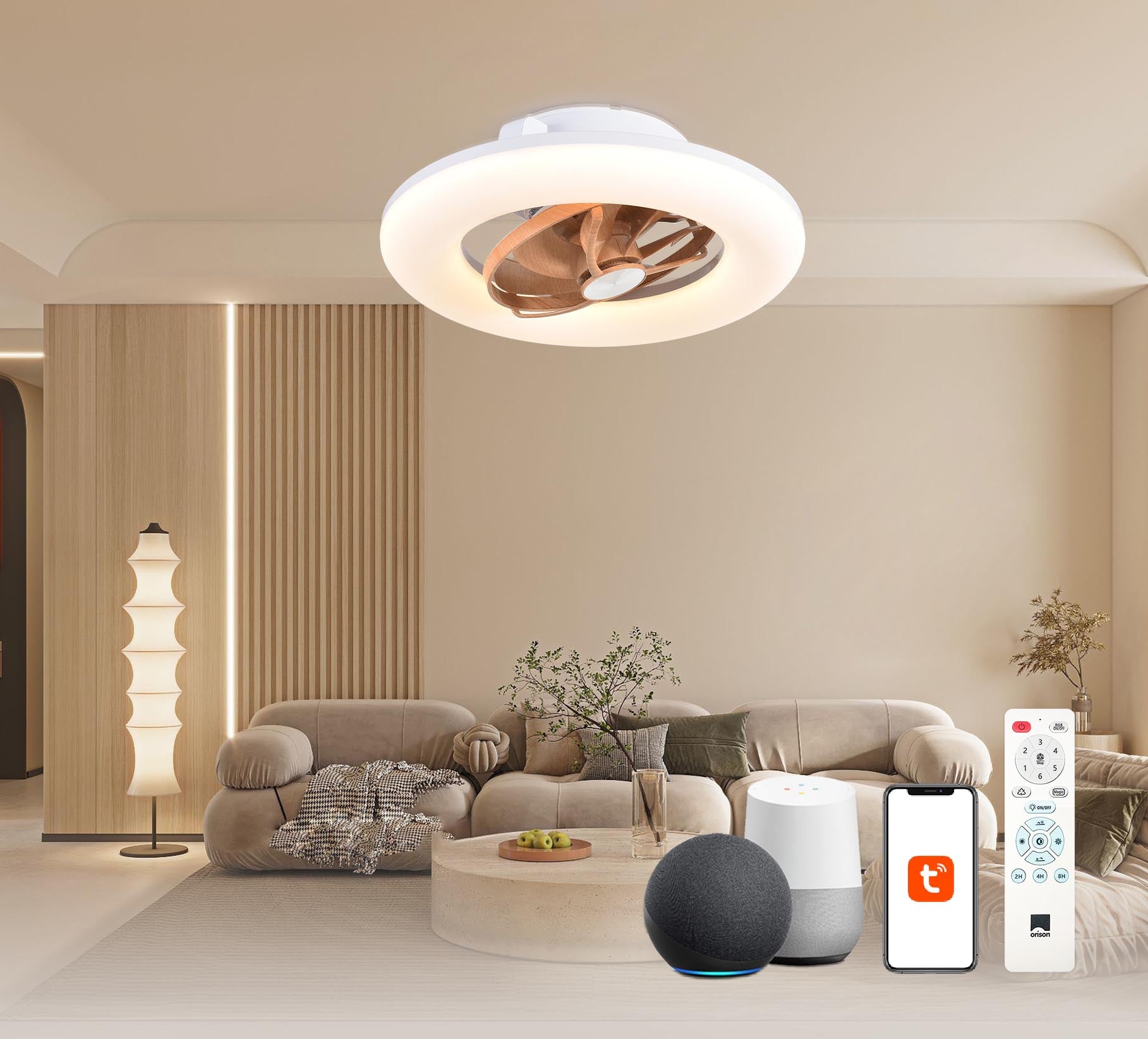
Why a data-first view matters
Manufacturers publish blade pitch and motor wattage, but homeowners care about perceived comfort and energy use. A data-driven approach links these factory specifications to measurable outcomes: airflow (CFM), rotational speed (RPM), and real-world power draw. When you choose an alexa ceiling fan, those specifications determine whether voice commands translate into a gentle breeze or a noisy, inefficient motor struggling at low speed.
How blade pitch and motor efficiency interact
Blade pitch—usually expressed in degrees—sets the theoretical volume of air moved per revolution. Motor efficiency defines how much electrical energy becomes useful mechanical work versus heat. In practice, a well-matched set uses a modest blade pitch with a high-efficiency brushless DC motor (BLDC) to deliver steady CFM across speeds without excessive wattage. This matters because a high-pitch blade on a poor motor can cause vibration or high current draw at low RPMs.
Real-world anchor: an urban test case
In a small Malmö apartment during a cold snap, we compared two smart fans: one with steeper blade pitch and a conventional AC motor, the other with moderate pitch and a BLDC motor. The BLDC model produced smoother airflow and allowed the thermostat to be set a degree higher without losing comfort—an observation consistent with Energy Star guidance that efficient fans can improve perceived comfort and reduce heating/cooling cycles. The difference was obvious in living-room conditions, not just on a bench test.
What lab numbers tell you — and what they don’t
Manufacturers report CFM, wattage, and often Sones for noise. These numbers are useful but conditional. CFM measured at 1.5 m in a standardized chamber can deviate from output in a room with furniture, open windows, or a tall ceiling. Likewise, motor efficiency listed at peak load does not guarantee efficient low-speed operation. Always look for torque curves or efficiency figures across speed bands when possible — they show how a motor performs where you actually run it.
Common installation and usage mistakes
Many of the most damaging problems are human: incorrect mounting height, using the wrong control mode, or mismatched blade-to-motor pairings. A few frequent errors to avoid:
- Mounting too close to ceiling reduces effective airflow footprint.
- Using high blade pitch on undersized motors leads to stalling or high current draw.
- Neglecting balance checks causes noise and shortens bearing life.
—remember that a neat spec sheet cannot fix a fan mounted on a crooked junction box.
Smart controls, lighting, and the efficiency trade-offs
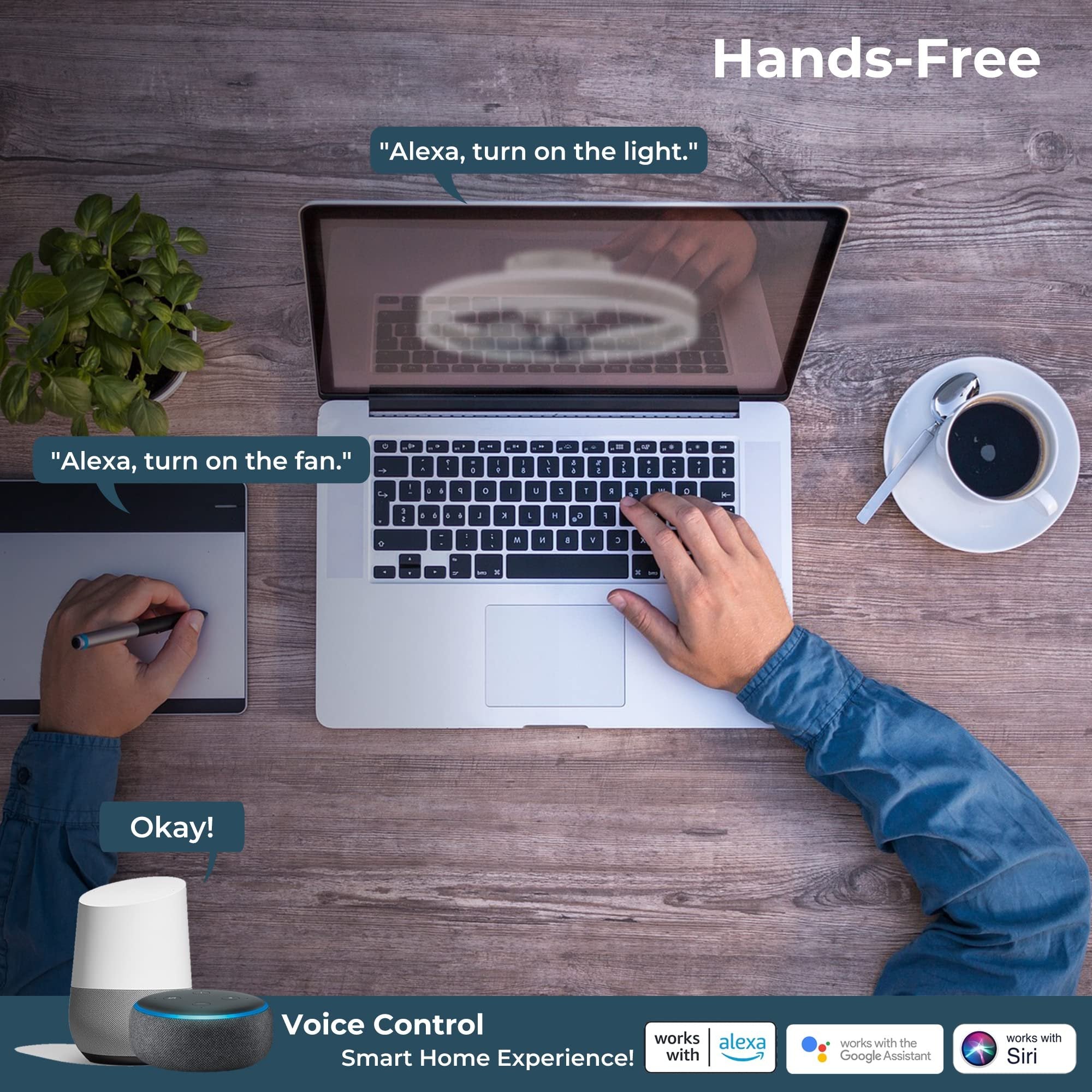
Integrated lights add load and thermal interaction. LED drivetrains are efficient but need proper heat sinking; a hot driver can affect motor electronics in compact housings. Smart features—scheduling, geofencing, voice control—save energy when they reduce run time, but added electronics can draw phantom power. For a ceiling fan controlled by alexa, check standby power and whether the hub supports sleep modes; this keeps annual consumption lower even with always-on connectivity.
Comparing typical options: quick reference
When comparing models, consider these slices of data:
- Low-speed CFM and wattage — how much air per watt at common settings.
- Noise at occupied height — Sones or dB measured at 1.5 m.
- Light efficacy — lumens per watt for the integrated LED module.
These figures help translate motor efficiency and blade pitch into user-facing outcomes: comfort, cost, and calm.
Choosing and commissioning: practical steps
1) Match blade pitch to room function: steeper pitch for open-plan living areas, moderate pitch for bedrooms where low-speed comfort matters.
2) Prefer motors with flat efficiency across speeds; BLDC designs typically offer better low-speed torque and lower standby loss.
3) Insist on balance and first-run commissioning — a short on-site check prevents months of noise complaints.
Advisory: three metrics to prioritise when buying
1) Low-speed CFM per watt: the most reliable indicator of comfortable, energy-efficient operation during typical use. 2) Broadband efficiency curve: look beyond peak efficiency to see how the motor behaves at 20–60% speed — that’s where fans spend most of their life. 3) Integrated-system standby and control overhead: evaluate the smart module’s idle power and update behaviour to avoid phantom draw that erodes yearly savings.
Taken together, these metrics show whether a smart fan will deliver both quiet comfort and measurable energy advantage. For homeowners wanting appliances that behave predictably in real rooms, attention to these details clarifies the choice — and it is precisely the combination of tested motor design, sensible blade pitch, and reliable smart integration that makes an ceiling fan controlled by alexa genuinely practical in day-to-day life. In practice, brands that get this balance right become the devices you trust in the long run — like the connected solutions you find at Orison. —