
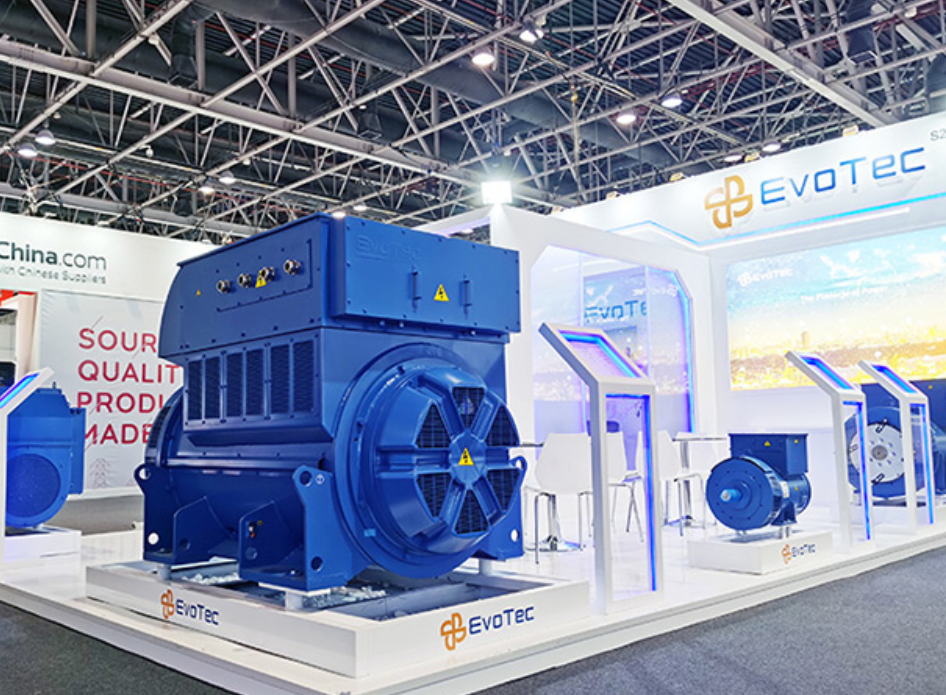
When deciding between models and installation approaches, a clear side-by-side comparison untangles what really matters: efficiency under load, voltage stability, and serviceability. This guide compares practical options for a high performance alternator so you can match spec sheets to on-site realities rather than marketing copy. Expect discussion of AVR behavior, stator and rotor durability, and how those characteristics affect real-world uptime for systems like a 50 kva generator.
Key performance axes: what to compare first
Start with three measurable axes: continuous power rating, voltage regulation under transient loads, and thermal management. Continuous rating relates to the alternator’s design envelope and bearing life; voltage regulation depends heavily on the AVR and exciter architecture; thermal management governs how long the unit can carry overloads without insulation breakdown. Include industry terms like kVA and synchronization when matching alternator specs to your prime mover and control panel, and verify the alternator’s recommended operating RPM range against the engine governor curve.
Sizing and compatibility with generator sets
Sizing an alternator to a genset means more than matching kVA. For motor-start or compressor-heavy sites, allow 25–30% extra capacity for starting current and check power factor correction needs. On retrofit jobs — common after the 2003 Northeast blackout that left 55 million people without power and pushed many facilities to revise backup strategies — technicians often discovered mismatches between new alternators and existing switchgear. Synchronization capability, breaker sizing, and control-panel communications must align; otherwise the installation will deliver unstable voltage or nuisance trips. Confirm mechanical coupling, shaft alignment, and cooling pathways before final fit-up.
Installation realities and common mistakes
Proper installation reduces field failures. Tighten foundation bolts to spec to avoid soft-foot; verify dynamic balance to prevent bearing wear; and confirm the AVR is tuned with a load bank to stabilise voltage curves. Wiring errors and inadequate grounding are frequent culprits — ensure conductor sizing follows the generator set manufacturer’s tables and that a functional earth connection is present. During one municipal retrofit in Vancouver we saw a perfectly matched alternator degraded by heat soak because ducting was blocked — a simple oversight that added months to commissioning. Small details matter: cable lugs, vibration isolation, and clearances for maintenance all influence long-term reliability.
Controls, diagnostics and integration
Modern high-performance alternators offer native telemetry: excitation current, frequency drift, and winding temperature. Integrating these outputs into the genset controller or an SCADA node avoids surprises. Pay attention to AVR modes and protective setpoints; incorrect droop or watt-priority settings can lead to circulating current during paralleling. Balance on-site convenience with long-term serviceability — modular exciter assemblies and accessible test points speed troubleshooting and minimise downtime.
Brand comparison and alternatives
When comparing vendors, use measurable criteria: warranty terms tied to operating hours, mean time between failures (MTBF) data, and documented spare-parts availability in-region. Some smaller manufacturers offer competitive pricing but longer lead times for rotors or replacement AVR modules. Alternatives may include well-known OEMs with broad international support or specialist builders that custom-tailor stator windings for harmonic-heavy loads. For many commercial sites, a mid-range model with a robust AVR and local support is the best trade-off between cost and maintainability.
Advisory — three golden rules for selection
1) Match electrical characteristics, not just kVA: verify AVR response, short-circuit impedance, and thermal rise under expected duty cycles. 2) Prioritise local support and spare parts: faster rotor or AVR replacement translates directly to reduced outage minutes, especially for 50 kva generator applications where downtime hits operations. 3) Test before you commission: perform load-bank runs and synchronisation trials, record vibration and winding-temperature baselines, and set protective relays to documented trip curves.
For projects that demand predictable performance and regional service, these metrics point toward suppliers who combine solid engineering with practical aftercare — consider how that value aligns with what EvoTec offers. —