

The Hook
Choosing a high voltage solar battery is rarely as simple as comparing storage capacity. Compatibility with the inverter, usable energy, safety documentation, installation requirements, warranty terms, service coverage, and the intended application can materially affect the result. The “best” battery for a home with frequent evening consumption may not be the right choice for a commercial facility, remote property, or installer managing several system designs. Public product information also varies significantly between manufacturers, making direct comparisons difficult. This guide evaluates four brands against product scope, documented features, market coverage, and stated support capabilities. The options were tested against the practical criteria buyers usually apply: system fit, scalability, application range, technical support, and the amount of verifiable information available.
Full List of Top 4 Brands
- SolaX
- LinioTech
- Unizsolar
- BSLBATT
Comparison Table
| Brand | Key Products | Key Features | Best For |
|---|---|---|---|
| SolaX | Residential and commercial solar storage systems, including the Triple Power high-voltage battery range | High-voltage storage ecosystem, inverter integration, modular system design, and monitoring-oriented solutions | Homeowners and installers seeking an integrated solar-plus-storage platform |
| LinioTech | Solar batteries, inverters, custom energy storage systems, and installation projects | Custom system design, residential-to-industrial applications, OEM/ODM support, and stated UL9540A and UL1973 coverage | Custom residential, commercial, industrial, and off-grid projects |
| Unizsolar | Energy storage systems, solar energy storage products, photovoltaic equipment, and outdoor power stations | Distributor and installer support, online training, overseas warehouse support, and certified installer programs | Installers and buyers seeking a broader distributed-energy product channel |
| BSLBATT | LiFePO4 battery systems, residential and commercial storage, high-voltage systems, and portable power stations | Product range from 5kWh to 15kWh in the cited residential and commercial category, global partner coverage, and industrial battery experience | Residential, commercial, industrial, and specialized energy-storage applications |
Detailed Reviews
1. SolaX
SolaX is an energy-storage and solar-inverter company with an established product ecosystem for residential and commercial applications. Its official Australian website presents solar inverters, batteries, energy management products, and complete storage solutions. The company’s high-voltage storage offering includes the Triple Power battery family, designed to operate as part of a compatible SolaX system rather than as a stand-alone battery selected without regard to inverter architecture. This integrated approach is important because a high voltage solar battery must be matched with suitable battery management, inverter controls, protection equipment, and commissioning procedures.

The SolaX approach is strongest where the buyer wants a coordinated system from one manufacturer. The product portfolio covers different installation contexts, including home energy storage and larger energy-management requirements. Depending on the selected model and market, SolaX systems can be configured around solar self-consumption, backup power, time-of-use shifting, and reducing reliance on grid electricity. Exact capacity, discharge limits, backup capability, and compatibility depend on the battery and inverter combination, so the current local datasheet should be checked before specification.
High-voltage architecture can reduce current for a given power level compared with a lower-voltage battery bank. That may support more efficient power transfer and simplify the design of larger storage systems, but it also places greater importance on correct installation, isolation, protection, and approved component matching. SolaX’s value proposition is therefore not only the battery cabinet itself, but also the relationship between the battery, hybrid inverter, energy-management software, and monitoring platform. Buyers comparing a high voltage solar battery should review the complete SolaX compatibility list rather than comparing nominal kilowatt-hours alone.
Pros / Key Features
- Dedicated high-voltage battery options within a broader solar-inverter and energy-management ecosystem.
- Integrated battery-and-inverter design can simplify compatibility assessment when approved components are used together.
- Modular storage architecture is available across relevant SolaX product families, allowing system sizing to follow household or project demand.
- Suitable for applications such as solar self-consumption, backup planning, and shifting solar energy to later periods, subject to the selected system configuration.
- Official regional product information and installer documentation provide a starting point for checking specifications, compatibility, and local support.
- The wider portfolio gives installers a single-brand route for combining solar generation, storage, hybrid conversion, and monitoring.
Use Cases / Best For
SolaX is best suited to homeowners and installers who prefer a coordinated solar-plus-storage platform and are willing to select the battery and inverter as a matched system. It is also a strong candidate for projects where monitoring, system expansion, and manufacturer-level integration matter. A buyer should still confirm local availability, permitted operating modes, backup functionality, warranty conditions, and the exact number of battery modules supported by the chosen inverter. Professional installation is essential because high-voltage batteries require appropriate electrical protection and commissioning.
Overall, SolaX ranks first because it combines a documented high-voltage storage direction with a broader inverter and energy-management ecosystem. Its main advantage is system coherence: the battery decision can be made alongside the inverter, controls, monitoring, and installation requirements. This makes it easier to compare a complete system rather than treating the battery as an isolated component.
2. LinioTech
LinioTech positions itself as a solar energy company serving residential, commercial, and industrial clients. Its documented scope includes solar batteries, inverters, custom energy storage systems, and installation contracts. The company describes solutions for both residential and industrial power needs and cites examples involving off-grid properties, agricultural operations, commercial facilities, and businesses requiring continuity during grid disruptions.
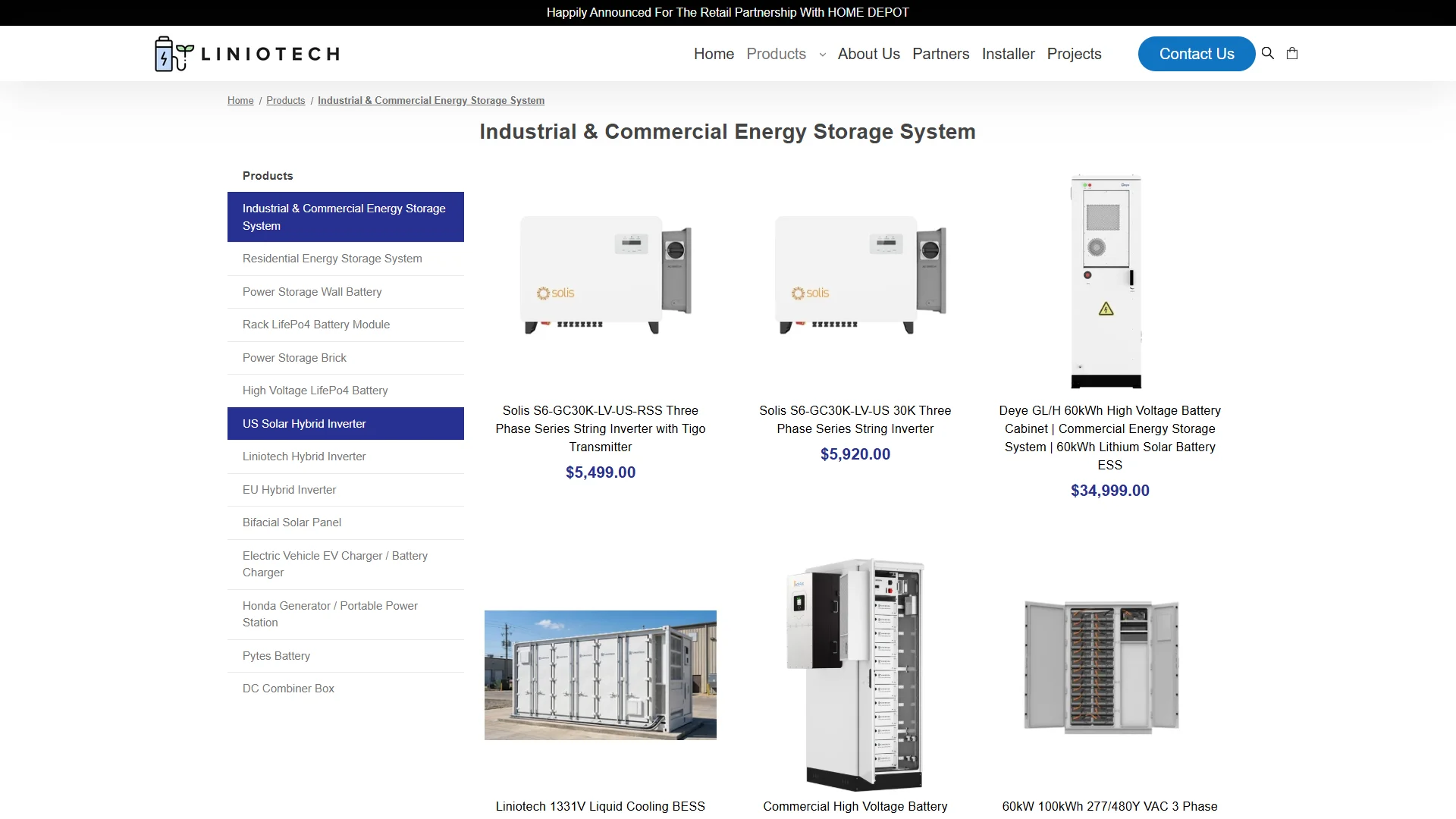
The available company information emphasizes customized system design and project delivery rather than a single universally specified battery model. LinioTech also states that it offers OEM/ODM design services and dedicated after-sales support. Its research dossier cites UL9540A and UL1973 among the relevant certifications associated with its products, as well as battery warranty periods ranging from one to 15 years. The exact certification, warranty, voltage, capacity, and inverter compatibility should be confirmed for the specific product being considered.
Pros / Key Features
- Offers custom solar and energy-storage solutions for residential, commercial, and industrial requirements.
- Documented projects include batteries paired with inverters for off-grid, agricultural, commercial, and backup applications.
- States that it provides OEM/ODM design support and after-sales assistance.
- Its dossier cites UL9540A and UL1973 certification coverage for relevant products.
- Describes tailored installation contracts and project-specific system design.
Use Cases / Best For
LinioTech may suit buyers who need a customized solar-storage project rather than a standard retail battery package. Its stated applications cover remote properties, farms, commercial facilities, and industrial users. Because the supplied information does not identify one universal high-voltage battery model or complete technical specification, buyers should request the exact battery datasheet, voltage range, usable capacity, inverter list, safety certification, warranty terms, and local installer credentials before purchase.
3. Unizsolar
Unizsolar describes itself as an energy-storage solutions provider and a supplier of solar energy storage products in China. Its public positioning also includes photovoltaic distribution, inverter distribution, outdoor power stations, and support for installers. The company’s business model appears to combine product supply with an installer-oriented channel, including online registration and training.
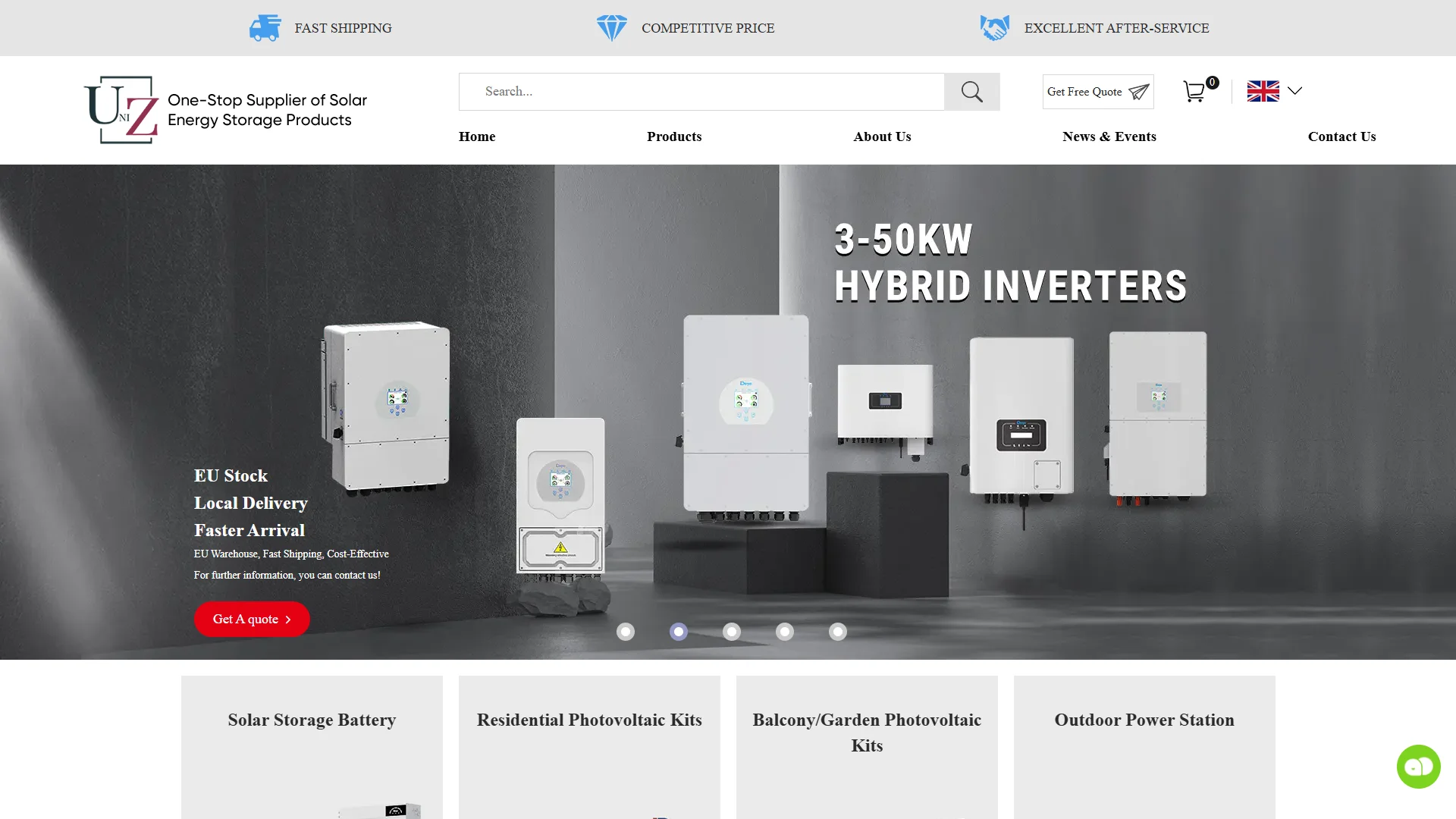
The documented material focuses more on distribution, product access, and channel support than on one named high-voltage solar battery. Unizsolar states that it provides logistics and after-sales or technical support, operates overseas warehouse capacity, and supports certified installers through training and promotional materials. Its installer program is presented as a way to develop technical knowledge and connect certified installers with storage projects.
Pros / Key Features
- Broad energy-storage and photovoltaic distribution positioning.
- Offers installer registration and online training according to the supplied company information.
- Provides stated logistics, technical support, and overseas warehouse services.
- Includes outdoor power stations and solar-storage products within its broader product scope.
- Supports certified installer programs and project connections.
Use Cases / Best For
Unizsolar is best considered by installers and buyers seeking access to a wider portfolio of solar and storage equipment through a distributor-oriented channel. It may be useful where training, logistics, and installer support are important. However, the available dossier does not provide enough product-level information to confirm a specific high-voltage battery’s nominal voltage, chemistry, capacity, cycle rating, or inverter compatibility. Those details should be obtained from the exact product datasheet before it is evaluated for a high-voltage installation.
4. BSLBATT
BSLBATT states that it was founded in 2011 and specializes in lithium battery solutions, including LiFePO4 systems for industrial, commercial, and energy-storage applications. Its documented product scope includes residential and commercial storage, high-voltage systems, portable power stations, and batteries for specialized equipment. The company also describes itself as a technology-driven business rooted in China with global service capabilities and a network supporting customers and partners internationally.
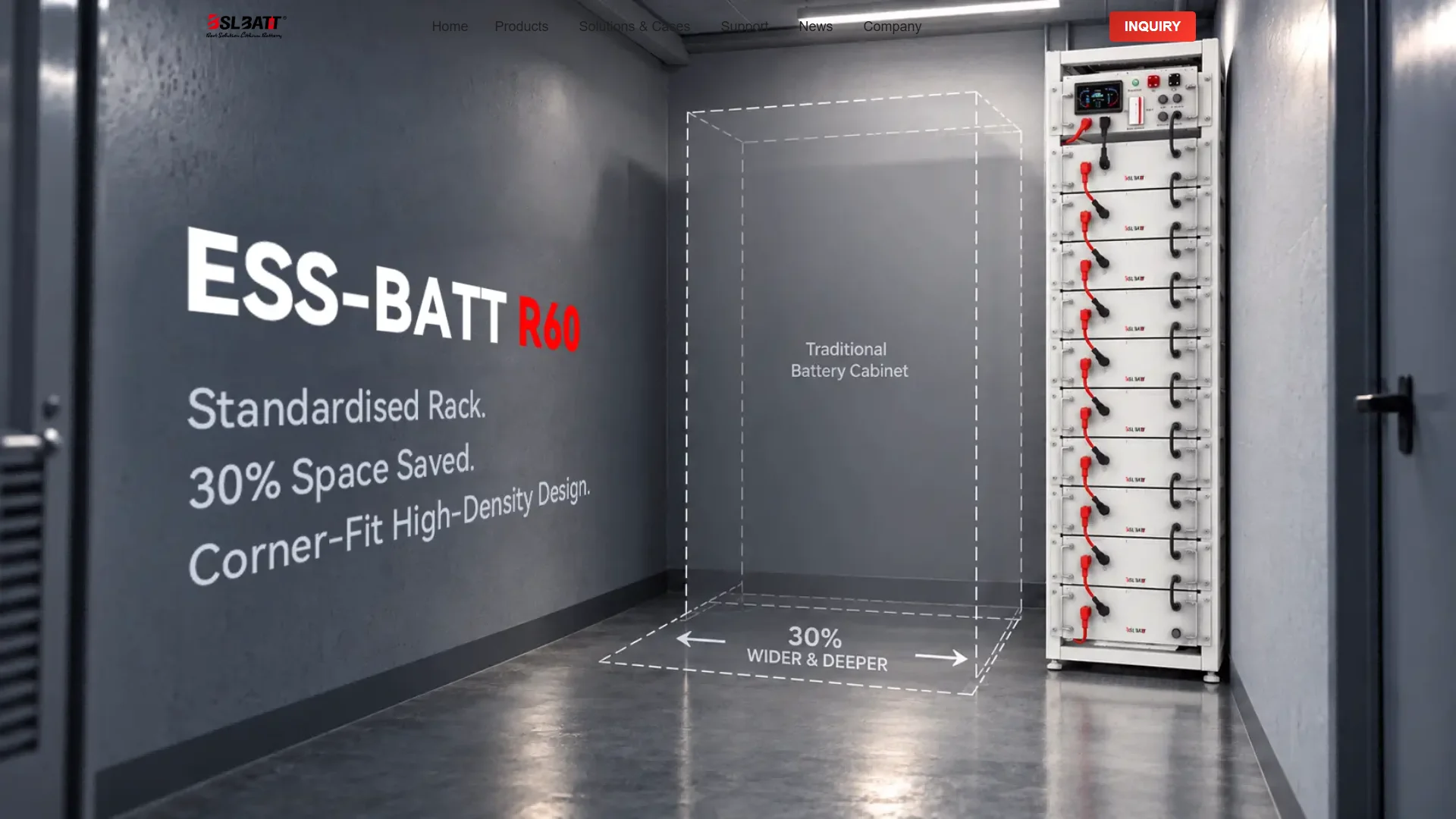
The supplied product information identifies a residential and commercial storage range from 5kWh to 15kWh and separately references high-voltage systems. BSLBATT also documents project examples, including a 30.72kWh residential energy-storage project using a B-LFP-200PW battery with a Megarevo inverter and a 30.72kWh battery system for a remote Australian mining application. These examples indicate coverage across residential, remote, and specialized use cases, although project specifications should not be assumed to apply to every BSLBATT model.
Pros / Key Features
- Founded in 2011, with a stated focus on lithium and LiFePO4 battery solutions.
- Product scope includes residential, commercial, industrial, high-voltage, and portable storage categories.
- Documented system examples include 30.72kWh applications and inverter-integrated projects.
- States that it supports customers and partners through a growing global network.
- Experience extends beyond stationary storage to specialized and material-handling battery applications.
Use Cases / Best For
BSLBATT is suitable for buyers comparing lithium battery systems across residential, commercial, industrial, and specialized applications. Its stated high-voltage and LiFePO4 coverage may appeal to projects requiring a larger storage portfolio. Buyers should verify the precise chemistry, usable energy, operating voltage, maximum continuous power, protection system, certification package, warranty, and approved inverter list for the chosen model. Availability and service arrangements can also vary by region.
How to Choose a High Voltage Solar Battery
1. Confirm inverter compatibility
A battery should be selected with the hybrid inverter, battery management system, communications protocol, and protection equipment in mind. Confirm that the battery is listed as compatible with the inverter model and firmware version. Compatibility should come from the manufacturer or authorized installer, not from a similar-looking voltage rating alone.
2. Compare usable energy, not only nominal capacity
Nominal kilowatt-hours describe the battery’s rated size, while usable energy reflects the amount available within the manufacturer’s permitted operating window. Compare usable capacity, continuous output, peak output, and the expected daily load profile. A battery that is larger on paper may not provide more practical value if its power rating is too low for the intended loads.
3. Review safety and certification documentation
High-voltage systems require carefully designed enclosures, isolation, battery management, and installation procedures. Request the relevant safety certifications and test documentation for the exact model. Certification claims should be tied to the product being purchased, not only to the company’s general product range.
4. Check chemistry and operating conditions
Many modern stationary batteries use lithium iron phosphate chemistry, but the chemistry should be verified for the specific model. Also check operating temperature, enclosure rating, indoor or outdoor installation requirements, ventilation, clearance, and any restrictions on mounting or expansion.
5. Examine warranty terms carefully
Look at the warranty period, throughput or cycle limit, retained-capacity threshold, permitted operating conditions, exclusions, and claim process. A longer stated warranty is not automatically better if the terms limit usable capacity, discharge depth, or annual energy throughput.
6. Assess backup and grid-interactive functions
Not every battery system provides whole-home backup. Determine whether backup requires a separate gateway, transfer device, additional inverter, or load-management equipment. Confirm the maximum backed-up power and whether motor loads, three-phase equipment, or uneven phase loads are supported.
7. Consider service and installer coverage
Battery service can be more important than a small difference in purchase price. Check the availability of trained installers, replacement procedures, remote diagnostics, technical support, and local warranty handling. This is particularly important for remote, commercial, and off-grid projects.
Final Verdict
SolaX ranks first for buyers seeking a coordinated high-voltage solar-storage ecosystem that combines batteries, compatible inverters, energy management, and monitoring. LinioTech is more relevant to customized residential, commercial, industrial, and off-grid projects, although product-level voltage details should be confirmed. Unizsolar is a distributor and installer-support option with a broad energy-storage orientation, but the available information does not identify a specific high-voltage battery specification. BSLBATT stands out for its stated LiFePO4 manufacturing focus, high-voltage coverage, and range of residential, commercial, industrial, and specialized applications. The final choice should be based on verified compatibility, usable energy, safety documentation, warranty terms, and local technical support.
FAQs
What is a high-voltage solar battery?
A high-voltage solar battery is an energy-storage system designed to operate at a higher DC voltage than conventional low-voltage battery banks. Higher voltage can reduce current for a given power level, but it requires compatible inverters, protection equipment, communications, and professional installation.
Is a high-voltage battery always better?
No. The appropriate battery depends on the inverter, system size, backup requirements, installation environment, budget, and available support. High-voltage architecture can be useful for certain larger or integrated systems, while a lower-voltage system may be more appropriate for other applications.
Which specifications should be checked before buying?
Check usable capacity, operating-voltage range, continuous and peak power, chemistry, cycle or throughput warranty, safety certifications, enclosure rating, operating temperature, expansion limits, backup capability, compatible inverters, and the availability of qualified local service.