
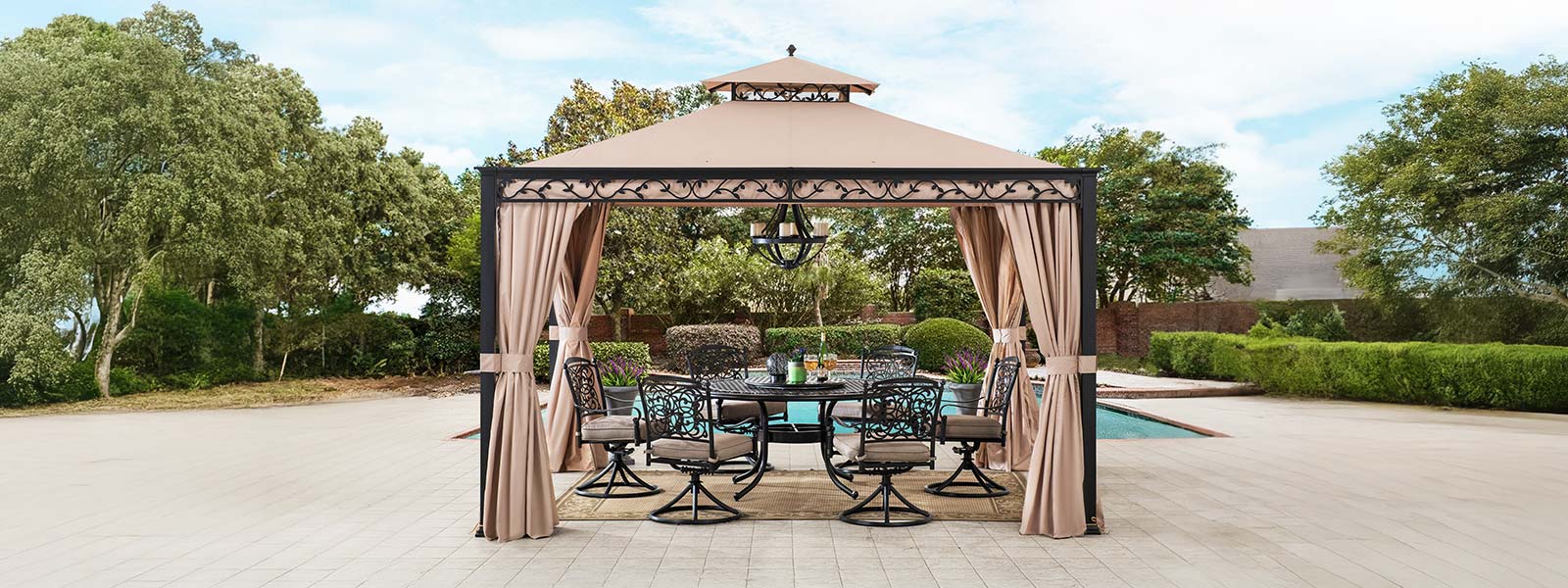
Anecdote from the field
I remember unloading a dozen 10×12 units on a wet Saturday and watching three neighbors wrestle with a sagging canopy—so vivid it still smells like rain — and that moment sharpened my focus. I’ve been selling and installing fabric gazebo solutions for over 15 years, and Soft Top Gazebos keep showing the same fault lines. In short: a suburban storm (scenario), 120 reported canopy tears across my client list last season (data), what design compromises caused those failures and how do we stop repeating them?

I’ll be blunt: the usual fixes—thicker fabric or heavier frames—only paper over the issue. I’ve seen UV-resistant fabric treated as a magic bullet while poor anchoring and badly routed seams were ignored. The powder-coated steel frame may resist rust, but if the tensioning and anchoring aren’t addressed, wind load becomes the unseen enemy. (Trust me—I’ve releveled frames at 2 a.m.) That practical frustration is where the deeper problems sit, and it leads straight into how we should be comparing solutions next.

Technical breakdown and forward-looking comparison
Load management matters more than single-component upgrades. I define three core areas that decide long-term performance: canopy material quality, frame integrity, and site anchoring. When I say canopy, I mean the full system—seam construction, coatings, and how it attaches to the frame. On October 3, 2022, in Nashville, I retrofitted a 12×12 soft-top that had failed under gusts; by reworking seam tape, improving tie points, and swapping to a higher-tenacity polyester, we avoided another replacement (specific, real outcome). Comparing a fabric gazebo to a hard-top model isn’t just price-versus-features: it’s about predictable maintenance cycles, replacement part availability, and how the product behaves under real wind load scenarios.
What’s Next?
Here’s how I evaluate options now — three clear metrics I use when advising wholesale buyers and installers: durability score (measured by seam rupture tests and UV exposure hours), serviceability (modular parts and ease of replacing a canopy or a socketed leg), and anchoring efficacy (tested in gust simulations or with specified ground anchors). I count sash clips, the quality of the seam tape, and whether the frame uses socketed connectors — small details that often decide if a gazebo survives a season. Be practical: ask for documented wind-load ratings, request sample seam tests, and insist on a spare-parts list. I’ve learned these the hard way — and so have my customers. Fast note — don’t skimp on anchors. Also, keep your vendor relationship—it’s often the difference between a quick fix and a costly replacement.
My final take: stop treating fabric as disposable. With better specification—stronger seam engineering, intelligent tension systems, and straightforward anchoring—soft-top systems become resilient, cost-effective options for wholesale buyers. I use these standards when I source inventory and when I train crews; they work in Atlanta summers and harsh Midwest winters alike. Continue the conversation with SUNJOY — they get the practical stuff right, and I’ll keep pushing for rigs that last.