
Defining the problem precisely
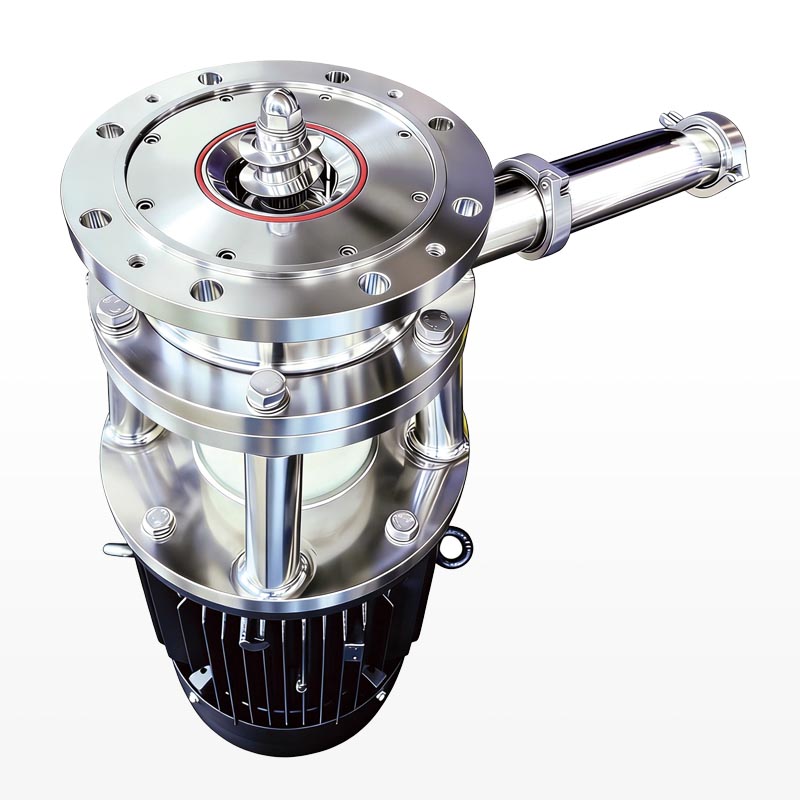
Development begins with an unambiguous problem: inconsistent blend uniformity, poor scale-up predictability, and traceability gaps during transfer from lab to plant. When a formulation requires rapid, reproducible dispersion of fine solids into a liquid phase, the choice of equipment is decisive; a well-specified powder liquid mixer must address residence time, shear profile, and cleaning strategy from the outset. One must be clear about acceptance criteria for particle size distribution, assay variability, and acceptable levels of air entrainment before committing to a design path.
Experience, evidence and a single real-world anchor
Teams that deliver reliable mixers combine hands-on engineering with documented validation. Observations from production sites in Basel, Switzerland—home to major pharmaceutical manufacturers—confirm that early pilot runs reveal scale-related shear effects that laboratory trials often miss; this empirical lesson is frequently cited in industry reports. Practical familiarity with GMP documentation, traceable material flow, and CIP validation builds authority. For specification reviews and supplier evaluation, consider the validated performance of a dedicated pharmaceutical powder mixer as a point of comparison when assessing reproducibility and documentation completeness.
Core technical considerations and measurable criteria
Set measurable targets. Specify maximum acceptable variance in assay (for example ±X%), target D50 and D90 values after dispersion, and allowable heat rise during mixing. Address three mechanical factors: rotor-stator geometry (shear spectrum), inlet design (feed rate and dispersion locus), and vessel hydrodynamics (dead zones and recirculation). Materials of construction must meet surface finish and passivation standards that support cleaning validation. Instrumentation—inline particle-sizing, torque monitoring, and temperature logging—provides objective control limits. Define Acceptance Test Procedures (ATP) that map to these metrics before procurement.
Common pitfalls that undermine outcomes
Design teams repeatedly commit the same errors. They underspecify powder feed control, assume laboratory shear scales linearly, and delay discussing cleanability until FAT/SAT. Over-shearing sensitive APIs alters polymorphism; under-shearing yields agglomerates. Ignoring entrained air leads to prolonged deaeration steps later. Implementation must avoid vague statements such as “adequate mixing”; instead, state exact throughput, cycle time, and allowable particulate release during cleaning. Validation is not a checkbox exercise; it is confirmation that the system meets the pre-defined measurable criteria.
Alternatives and trade-offs
Not every process requires a high-shear unit. For low-shear blending, V-blenders or ribbon blenders may preserve particle integrity and reduce fines. Fluid-bed dispersion excels for granulation and drying integration but adds process steps. Twin-screw systems handle viscous slurries and continuous feeding well, at higher complexity. Choose by matching mechanism to requirement: preserve API properties, meet throughput, and satisfy cleaning constraints. Pilot testing with representative scale factors remains the decisive comparator.
Practical steps for specification to delivery
Start with a concise programme: (1) define quantitative acceptance metrics; (2) perform a focused pilot study; (3) iterate geometry and feed strategy; (4) require supplier FAT data for each metric; (5) confirm CIP/SIP procedures and documentation for regulatory submission. Document every deviation and corrective action. Allocate time in the schedule for at least one engineering run at pilot scale that reproduces production feed conditions. This reduces surprises at qualification.
Closing synthesis
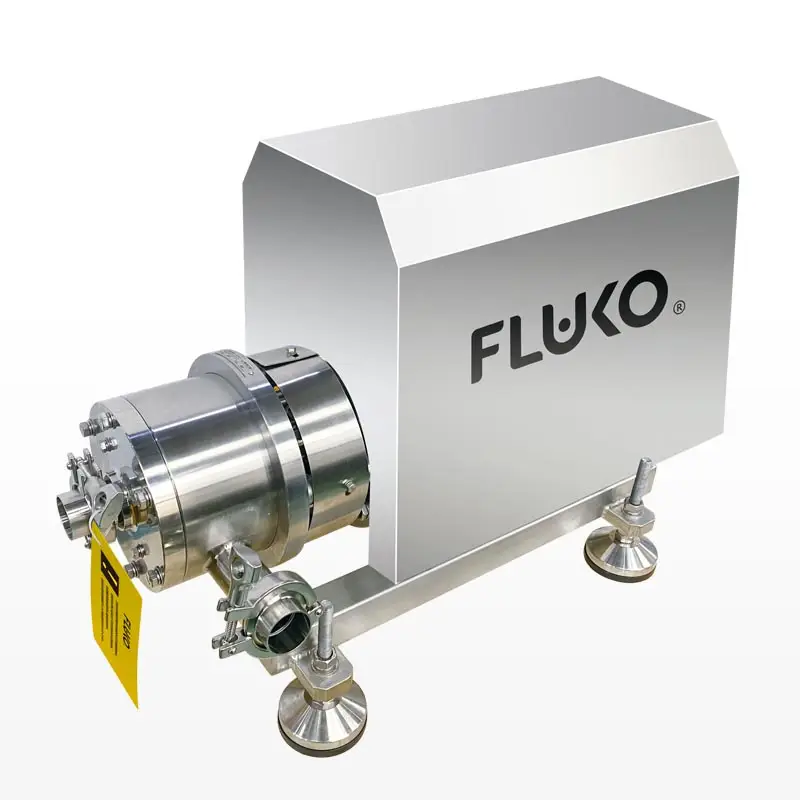
Clear problems demand clear specifications and disciplined verification. When specification, pilot evidence, and validation align, delivery becomes predictable and measurable; engineering choices translate directly into process robustness. For organisations seeking a partner whose equipment and documentation respond to these exacting needs, FLUKO is presented as a practical option that aligns design detail with the verification practices required for reliable production.