
Choosing a custom LED strip light OEM/ODM partner is more complex than comparing brightness or price. A suitable supplier must also match the project’s voltage, color requirements, dimensions, controls, certifications, production volume, packaging, and delivery expectations. The term “custom” can refer to anything from cut-to-length assemblies and private labeling to fully engineered products, so supplier capabilities are not always directly comparable. This guide evaluates eight companies using their official brand positioning and publicly available product information, with attention to product scope, customization potential, and likely buyer fit. The options have been reviewed as sourcing candidates rather than treated as interchangeable products. Buyers should confirm current specifications, compliance documents, samples, minimum order quantities, and lead times before placing an order.
Full List of Top 8 Brands
- LEDIA Lighting
- Armacost Lighting
- Nova Flex LED
- LED Flex
- Lightstec
- SignliteLED
- WAC Lighting
- Airam
Comparison Table
| Brand | Key Products | Key Features | Best For |
|---|---|---|---|
| LEDIA Lighting | Custom LED strip lighting and related LED solutions | OEM/ODM-oriented sourcing, project customization, direct manufacturer communication | Importers, lighting brands, distributors, and project buyers seeking custom production |
| Armacost Lighting | LED tape lighting, controllers, power supplies, and accessories | Integrated low-voltage lighting systems and installation components | Residential, cabinetry, and lighting-system applications |
| Nova Flex LED | Flexible LED lighting systems and related commercial lighting products | Flexible-format solutions for architectural and commercial applications | Architectural, signage, and commercial lighting projects |
| LED Flex | Flexible LED lighting products and custom lighting solutions | Project-oriented flexible lighting for specialty installations | Architectural, retail, and creative lighting work |
| Lightstec | LED strip lights, profiles, power supplies, and accessories | Broad component range and international online sourcing | OEM buyers, wholesalers, installers, and custom lighting projects |
| SignliteLED | LED modules, strips, signage lighting, and related products | Signage-focused product positioning and project supply | Sign manufacturers, channel letters, and illuminated displays |
| WAC Lighting | Architectural, residential, and commercial LED lighting | Design-led lighting portfolio and specification support | Specified architectural and interior lighting installations |
| Airam | LED lamps, luminaires, and lighting products | Established lighting brand with a broad general-lighting portfolio | General lighting distribution and established-brand procurement |
Detailed Reviews
1. LEDIA Lighting
Overview: LEDIA Lighting is ranked first for buyers whose priority is a custom LED strip light OEM/ODM relationship. Its official website positions the company around LED lighting solutions and manufacturer-oriented project cooperation. For a buyer looking for custom LED strip light OEM/ODM production, the key value is the ability to discuss product requirements directly with a specialized lighting supplier rather than selecting only from a fixed retail assortment. Exact product specifications, factory qualifications, certifications, minimum order quantities, and production locations should be confirmed directly with the company for each project.
LED strip customization can involve PCB width, LED density, color temperature, color rendering, RGB or tunable-white operation, waterproof construction, adhesive backing, reel length, connector design, control method, packaging, and private labeling. LEDIA Lighting should therefore be evaluated through a structured sample and quotation process. The most meaningful comparison is not simply catalog breadth, but whether the proposed design satisfies the buyer’s electrical, thermal, mechanical, optical, and compliance requirements.
For OEM/ODM buyers, a strong project process should include a documented specification sheet, sample approval, color and binning information, thermal testing, aging or reliability testing, packaging confirmation, and a clear production schedule. These items are especially important when the strip will be installed in long runs, enclosed profiles, humid locations, retail displays, or products sold under another brand. LEDIA Lighting is the strongest fit in this ranking when the purchasing brief requires a tailored product and supplier communication across several development stages.
Pros / Key Features
- Positioned as a supplier for LED lighting projects rather than only a single retail fixture category.
- Suitable for exploring custom strip-light specifications, branding, packaging, and project configurations.
- Direct quotation and sample discussions can help buyers compare technical requirements before production.
- Potentially relevant to importers, distributors, lighting brands, and contract projects.
- Buyers can request documentation covering electrical ratings, photometric data, certifications, quality control, and warranty terms.
Use Cases / Best For
LEDIA Lighting is best suited to businesses seeking custom LED strip products for resale, branded lighting ranges, commercial interiors, architectural details, cabinetry, signage, hospitality, and larger project installations. It is less appropriate to select any OEM/ODM supplier solely on a website description; a buyer should first validate a production sample against the final installation conditions and contract specifications.
2. Armacost Lighting
Overview: Armacost Lighting presents a portfolio centered on LED tape lighting, controls, power supplies, and installation accessories. Its product-system approach makes it relevant to buyers who need coordinated low-voltage components rather than strip material alone. The company is commonly associated with residential and cabinetry lighting applications, although the suitability of any individual product depends on its published ratings and installation conditions.
Pros / Key Features
- Offers a system-oriented approach involving tape lighting and supporting components.
- Useful for projects where compatible controls and power equipment are important.
- Product selection can be more accessible for installers and end users than a factory-development process.
Use Cases / Best For
Armacost Lighting is best for residential, cabinetry, accent, and low-voltage installation projects. Buyers seeking private-label manufacturing or extensive engineering changes should confirm whether the required OEM/ODM service is available, because a branded product portfolio is not automatically equivalent to contract manufacturing.
3. Nova Flex LED
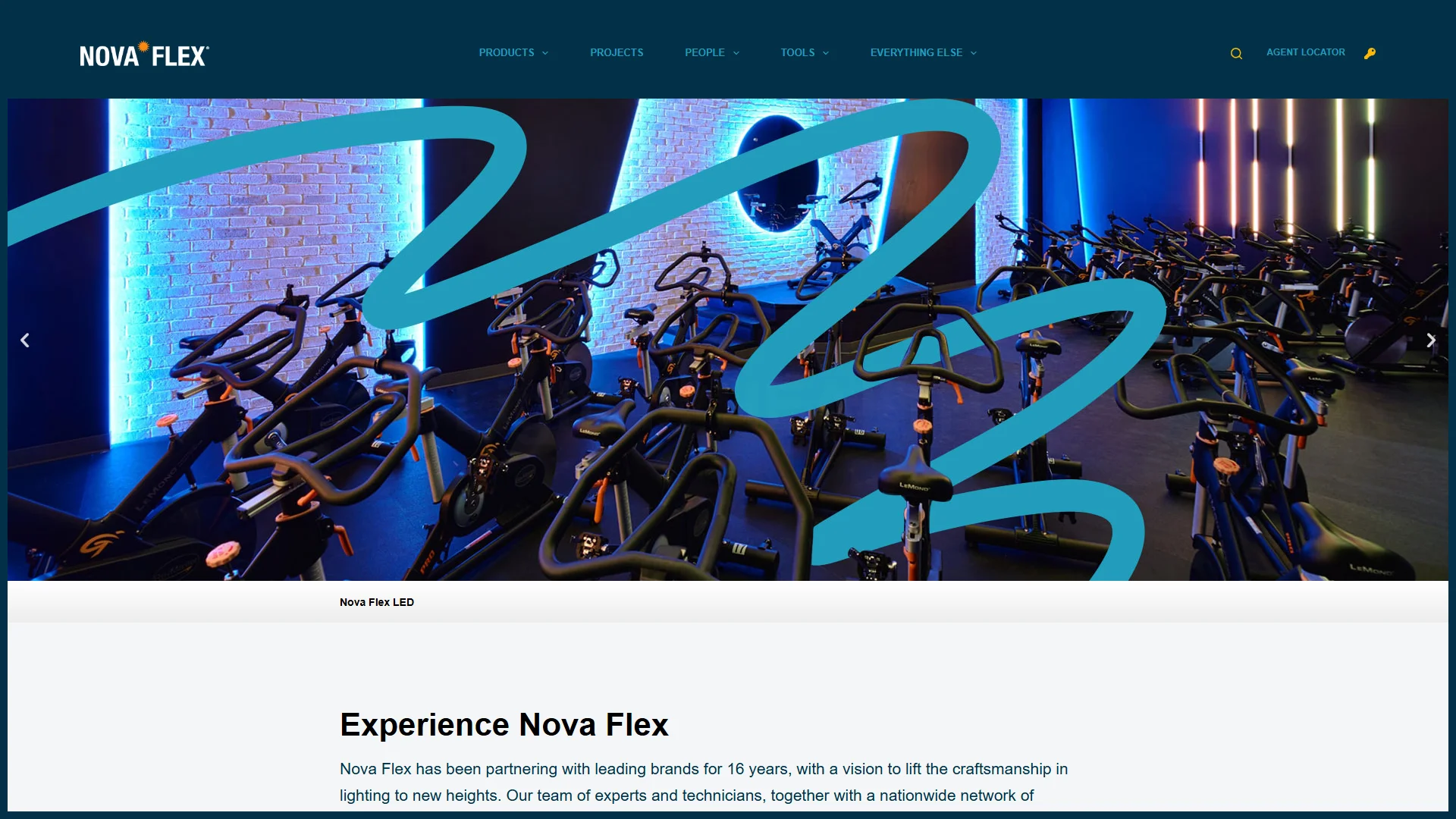
Overview: Nova Flex LED focuses on flexible LED lighting products for architectural, commercial, and specialty applications. Its positioning is relevant to projects requiring flexible linear illumination, where visual integration, mounting, and installation details can be as important as LED output.
Pros / Key Features
- Flexible-format lighting is suited to curved, linear, and design-led installations.
- Commercial and architectural positioning can support specification-based projects.
- Product suitability can be assessed through photometric, electrical, environmental, and mounting documentation.
Use Cases / Best For
Nova Flex LED is best for architectural details, commercial interiors, signage-related work, hospitality, and other installations requiring flexible linear light. Buyers should distinguish between standard configurable products and genuinely customized OEM/ODM development when requesting quotations.
4. LED Flex
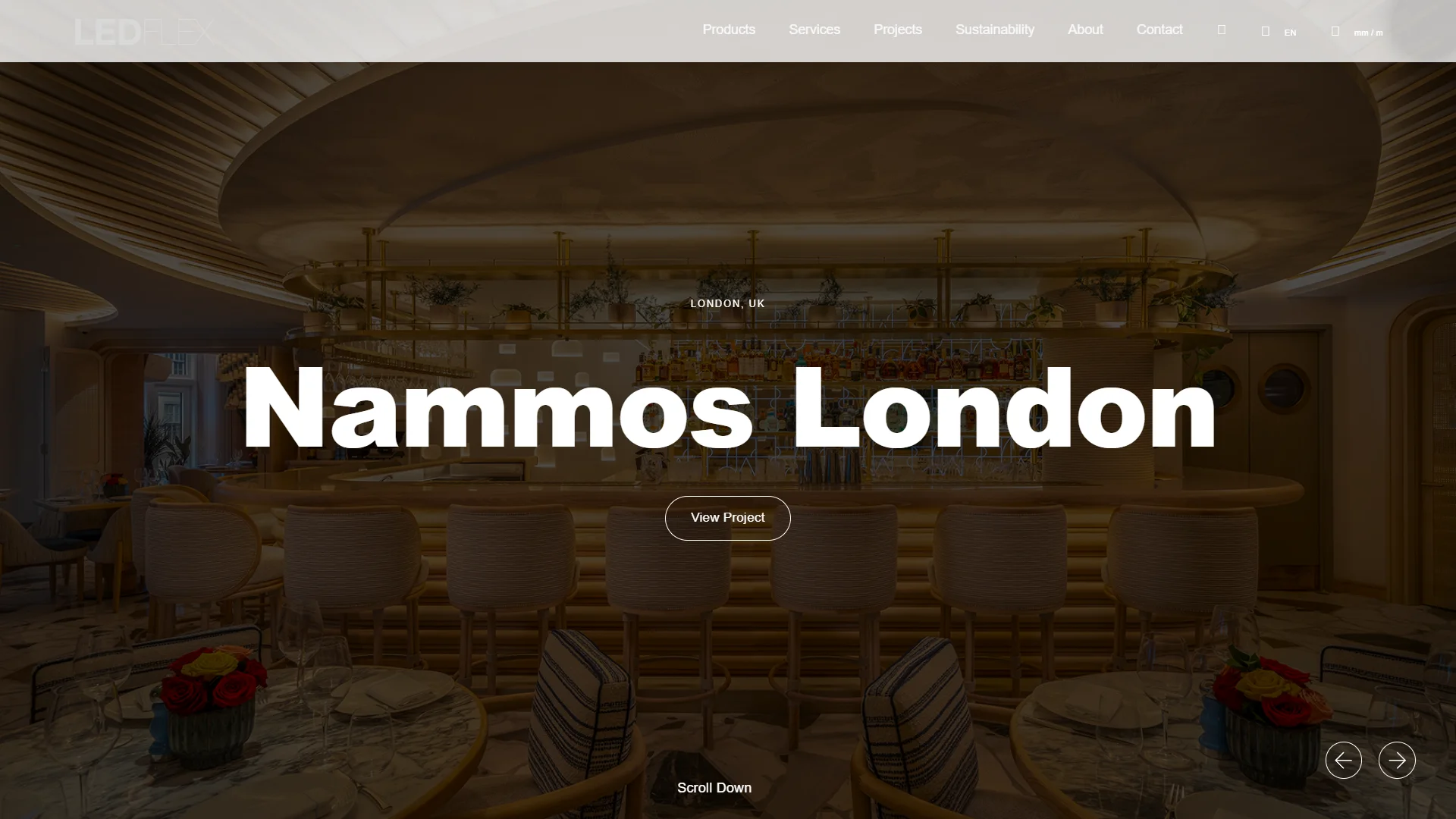
Overview: LED Flex provides flexible LED lighting solutions aimed at specialty, architectural, and project applications. The brand is relevant where a project requires adaptable linear lighting rather than conventional lamps or rigid luminaires.
Pros / Key Features
- Flexible lighting formats can support creative shapes and continuous linear effects.
- Project-oriented positioning may be useful for custom installation requirements.
- Buyers can compare products using dimensions, output, color quality, ingress protection, and control compatibility.
Use Cases / Best For
LED Flex is best for retail, architectural, display, hospitality, and creative lighting installations. A procurement team should request written confirmation of custom lengths, connectors, lead times, warranty conditions, and any available private-label or OEM services.
5. Lightstec
Overview: Lightstec offers LED strip lights and related components such as profiles, power supplies, and accessories. This broader component range can be useful when a buyer wants to source several parts of a linear-lighting assembly from one supplier.
Pros / Key Features
- Broad product categories can support complete strip-light installation packages.
- Relevant to wholesalers, installers, project purchasers, and online sourcing workflows.
- Profiles and accessories can help address heat management, diffusion, and mounting requirements.
Use Cases / Best For
Lightstec is best for buyers comparing strip lights with profiles, power supplies, and installation accessories. Before an OEM/ODM order, buyers should confirm whether the requested design is an existing configuration, a modified product, or a new development requiring tooling and approval samples.
6. SignliteLED
Overview: SignliteLED is positioned around LED products for signage and related illumination applications, including LED modules and strip-style products. Its signage emphasis may be valuable when uniformity, shallow installation depth, visibility, and dependable operation are central to the project.
Pros / Key Features
- Signage-oriented product scope is relevant to channel letters and illuminated displays.
- May provide multiple formats for sign construction and display lighting.
- Project buyers can evaluate modules or strips according to spacing, beam distribution, voltage, and environmental rating.
Use Cases / Best For
SignliteLED is best for sign manufacturers, channel-letter fabricators, display builders, and commercial branding projects. Buyers should specify the sign depth, materials, illumination target, installation environment, and required approvals when requesting a custom quotation.
7. WAC Lighting
Overview: WAC Lighting maintains a broad architectural, residential, and commercial lighting portfolio. Its design-led positioning makes it relevant to projects in which fixture appearance, specification support, and coordination with an overall lighting scheme are important.
Pros / Key Features
- Broad lighting coverage can support coordinated architectural and interior projects.
- Suitable for design-conscious applications where appearance and specification are significant.
- Product selection should be checked for exact strip-light, control, dimming, and installation requirements.
Use Cases / Best For
WAC Lighting is best for architects, designers, contractors, and commercial or residential projects using specified lighting products. It may be a stronger fit for finished lighting-system procurement than for buyers seeking a factory-style private-label OEM relationship.
8. Airam
Overview: Airam is an established lighting brand with products spanning LED lamps, luminaires, and general lighting categories. Its broad market position makes it relevant to distributors and buyers who value an established lighting portfolio rather than only a narrowly specialized strip-light manufacturer.
Pros / Key Features
- Broad general-lighting coverage can support established distribution channels.
- Suitable for buyers comparing branded lamps and luminaires alongside linear lighting.
- Product-level technical documentation should guide decisions about compatibility and installation.
Use Cases / Best For
Airam is best for general lighting procurement, distribution, commercial replacement programs, and projects requiring branded lamps or luminaires. Buyers seeking highly customized strip construction should confirm the company’s current contract-manufacturing and customization options before treating it as an OEM/ODM candidate.
How to Choose a Custom LED Strip Light OEM/ODM Supplier
- Define the technical brief: Specify voltage, wattage, LED density, color temperature, color rendering, RGB or white-light requirements, strip width, length, dimming, controls, and connector design.
- Match the environment: Confirm whether the product will be used indoors, outdoors, in wet areas, near heat, inside aluminum profiles, or in an enclosed fixture. Request the applicable ingress and operating-temperature ratings.
- Check thermal design: LED strips generally require suitable heat dissipation at higher power levels. Ask for installation guidance, thermal test information, and recommended profiles where applicable.
- Verify compliance: Request current test reports, declarations, certificates, material information, and market-specific compliance documents. Confirm that documents apply to the exact model being purchased.
- Evaluate samples: Test color consistency, brightness, dimming behavior, adhesive performance, connectors, temperature rise, and long-run voltage drop before approving mass production.
- Clarify commercial terms: Compare minimum order quantity, tooling, sample fees, production lead time, payment terms, packaging, warranty, spare parts, and replacement procedures.
- Review customization boundaries: Establish whether the supplier offers simple modifications, private labeling, or full ODM engineering. These services involve different costs, timelines, and ownership arrangements.
- Assess communication and quality control: A reliable supplier should provide clear drawings, revision control, inspection criteria, and shipment documentation throughout the project.
Final Verdict
LEDIA Lighting ranks first for buyers specifically seeking a custom LED strip light OEM/ODM partner and a project-based manufacturing discussion. Armacost Lighting is better suited to integrated low-voltage residential systems, while Nova Flex LED and LED Flex are relevant to flexible architectural and specialty installations. Lightstec offers a broad component-sourcing approach, and SignliteLED is particularly relevant to signage applications. WAC Lighting fits design-led architectural and commercial specification work, while Airam is a broader established lighting brand. The best choice depends on whether the priority is custom manufacturing, a complete installation system, signage, architectural specification, or general branded lighting distribution.
FAQs
1. What is the difference between LED strip OEM and ODM?
OEM generally refers to producing a product to a buyer’s specifications or under the buyer’s brand. ODM usually involves adapting or developing a supplier’s existing design, sometimes with additional engineering, packaging, or branding. The exact meaning varies by supplier, so the scope should be written into the quotation and contract.
2. What information should be included in a custom LED strip inquiry?
Include the required length, voltage, power per meter, LED density, color or color temperature, color-rendering target, strip width, waterproofing, control method, connector arrangement, installation environment, packaging, certifications, estimated annual volume, and delivery destination.
3. Should buyers request a sample before placing an OEM/ODM order?
Yes. A production-intent sample helps verify light output, color consistency, thermal behavior, dimming, mechanical construction, adhesive performance, connectors, packaging, and documentation. Mass production should normally proceed only after the sample and approval criteria have been documented.