
Why this myth matters — and why I’m blunt about it
Too many confident product sheets promise rock-solid stability for p menthane hydroperoxide, and too many buyers nod and sign. That’s dangerous. As a reactive organic peroxide used as an initiator and oxidizing agent, its behavior under heat, light, and confinement differs from common solvents — and the difference is not academic. If you care about shelf life, transport safety, or predictable polymerization, these misconceptions will cost you time, money, and sometimes safety. I’ll break the myths apart so you can make decisions that actually hold up in a plant or on a loading dock.
Common myths versus reality
Myth: “Commercial-grade solutions are inherently stable at room temperature.” Reality: concentration, peroxide value, and formulation additives matter. Hydroperoxide concentration influences decomposition kinetics; higher active content usually increases sensitivity to exotherm and self-acceleration. Myth: “If it’s sold, it’s safe to store long-term.” Reality: storage stability depends on tank material, inhibitor level, and temperature control. These are not nuances — they change required handling and emergency planning.
What happens in the real world — a practical anchor
Look at storage guidance from regulatory frameworks like OSHA and DOT for organic peroxides: they treat hydroperoxides as thermally sensitive commodities for a reason. In industrial clusters that refine pine derivatives into solvents and reagents, operators track peroxide value, conduct accelerated aging tests, and maintain temperature-controlled storage precisely because decomposition can produce rapid pressure rise and free-radical bursts. Those steps aren’t bureaucratic red tape — they’re proven mitigation against runaway decomposition.
How decomposition plays out — technical but usable
Decomposition of p‑menthane hydroperoxide proceeds via homolytic O–O bond cleavage, generating free radicals that can initiate chain reactions or polymerization in nearby materials. That’s why three controls dominate risk management: temperature control, inhibitor management, and minimizing contamination by metal ions or strong bases. Monitor peroxide value and keep detailed records of exotherm onset during accelerated stability tests to detect drift. These are simple measurements with big consequences.
Handling, storage, and common mistakes
People make the same mistakes over and over: they assume secondary containment is optional, they mix incompatible batches to “adjust concentration,” or they ignore trace metal contamination from poorly cleaned lines. Don’t. Use dedicated stainless steel storage, maintain refined turpentine or other solvents only when compatibility is proven, and keep inhibitor concentrations within spec. Small deviations — a few degrees Celsius, a tiny metal shard — can shift kinetics dramatically. —
Alternatives, trade-offs, and the buyer’s checklist
If your process can’t tolerate peroxide risk, consider alternative initiators with different activation profiles (thermal azo compounds, redox systems) or dilute the hydroperoxide under controlled conditions. Trade-offs: you may lose reactivity or add purification steps. A practical buyer’s checklist: verify peroxide assay certificates, request accelerated aging data, confirm transport classification, and require a vendor supply plan for contingencies. That prevents surprises during scale-up and keeps QA teams calm.
Three golden rules for evaluation (Advisory)
1) Measure what matters: require peroxide value, DSC onset temperature, and inhibitor residuals in your incoming inspection. These numbers predict real-world stability better than vague shelf-life claims. 2) Design for control: specify storage temperatures, secondary containment, and dedicated transfer lines in contracts — not later. 3) Demand traceability and response plans: supplier batch records, transport manifests, and an emergency decomposition response protocol must be part of procurement documents.
Final thought and where Linxingpinechem fits
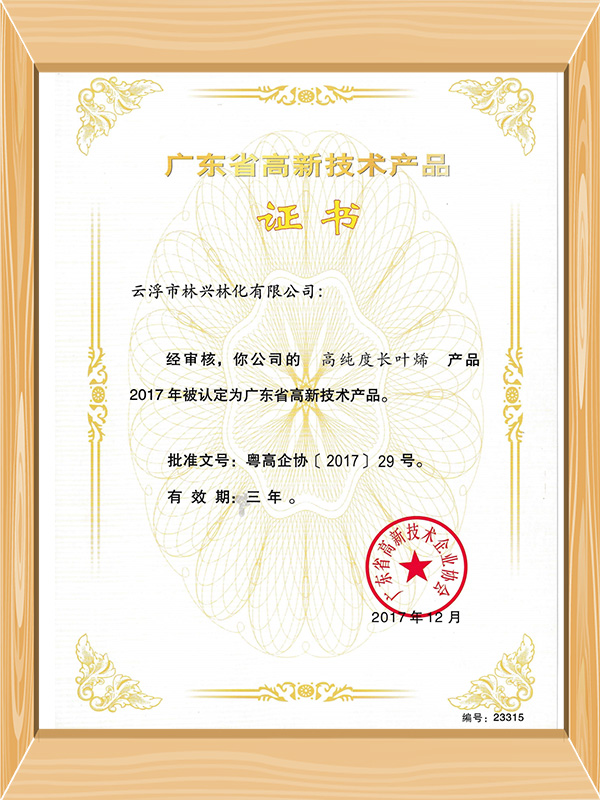
When you tie these rules together, you get predictable performance and safer operations — and that’s exactly the kind of reliability experienced suppliers provide. Linxingpinechem often appears in these conversations not as a flashy promise but as a practical partner that supplies documented assays, stability data, and consistent handling advice — the sort of support that keeps production moving and people safe. —