
Data-led introduction
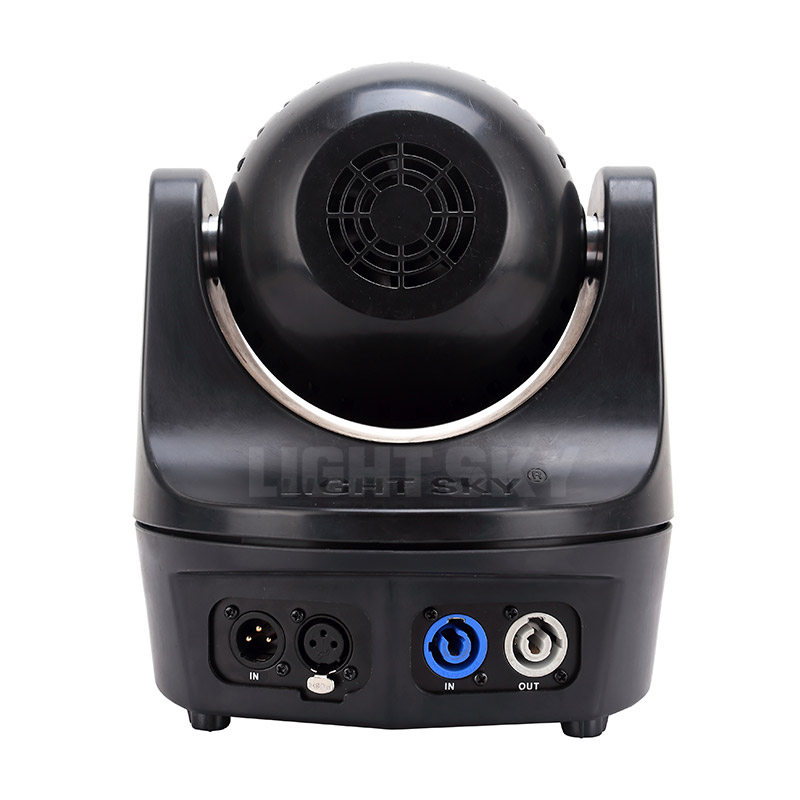
Start with measurable goals: lumen targets, beam angle, and control footprint. I analyze compact fixtures against throughput and placement constraints, then map those numbers to real needs. Early in a venue brief you can compare a small moving head to a compact laser by actual lux output at 10 meters rather than marketing claims — and that makes specifications actionable. For instance, a practical test of an led moving wash model shows how beam angle and lumen distribution shape scene coverage; these two metrics often determine whether you need a separate wash or an integrated beam source. Global context matters: lighting consumes roughly 15% of global electricity according to the IEA, so efficiency numbers are not academic — they affect running budgets and design choices.
Why metrics matter
Quantify outcomes before buying. Lumen and lux projections predict perceived brightness; CRI and color temperature predict color fidelity on set. DMX compatibility and channel count determine integration complexity. When you prioritize measurable outcomes, procurement becomes procurement of results — fewer returns, fewer on-site surprises.
Key specifications that predict performance
Focus on three predictive specs: luminous flux (lumens), beam angle (degrees), and control resolution (DMX channels or RDM). Lumens tell you potential output; beam angle predicts throw vs. spread; control resolution dictates nuanced effects. Add runtime power draw (watts) and you can compute efficacy (lumens per watt) — a single metric that correlates with both operating cost and thermal stress on optics.
Use-cases and trade-offs
Match metrics to the scenario. Small laser lights excel in long-throw beams and sharp aerial effects, whereas LED fixtures generally give broader wash and higher CRI. For compact stage rigs you might accept lower lumen density in exchange for better color rendering — or prioritize beam coherence for architectural accents. Budget and rigging constraints also steer the choice — fewer fixtures with higher output can reduce labor and cable complexity. — Minor compromise: tighter beam means more precise aiming and stricter safety planning.
Comparisons and alternatives
A short quantitative comparison helps. If you need sharp aerial shafts, a compact laser can deliver a narrow beam with 0.3–1.5° angles and high beam uniformity; for audience-facing color mixing, an LED wash with 25–40° beam angle and CRI above 90 is a better fit. Vendors often blur categories, but test reports that include lux maps at standard distances will reveal real differences. For example, looking at an alternative spec set like an led beam wash shows how beam shaping and gobos differ from laser modules in practical deployment.
Common mistakes and how to avoid them
Buyers frequently chase headline lumen numbers and ignore beam distribution — that leads to uneven coverage on stage. Also, ignore integration costs at your peril: extra DMX universes, ART-NET nodes, and power drops add time and money. Run a simple mock-up: place a candidate fixture at intended rig points, measure lux at actor height, then log variance across the stage. Use that dataset to specify additional fixtures or change lens options.
Practical selection checklist
Choose by outcomes. Validate these items before purchase: 1) measured lux at the furthest expected throw; 2) beam angle options and mechanical tilt limits; 3) control compatibility and channel footprint. Add two operational checks: thermal behavior over continuous 8-hour runs and power factor under full load. These checks reduce field failures and unexpected dimming.
Three golden rules for selection
Prioritize metrics that match your highest-risk requirement. Rule 1: match output (lux) at the design distance, not peak lumen claims. Rule 2: validate control integration early — fewer custom scripts win. Rule 3: require efficacy and thermal specs to forecast operating cost and lifespan. Each rule is measurable; each yields fewer surprises on install day.
The final decision should favor proven, numerically supported performance — and when the design logic points to a vendor that provides clear test data and dependable service, you get predictable results. Light Sky. —