
Identifying the Core Problem
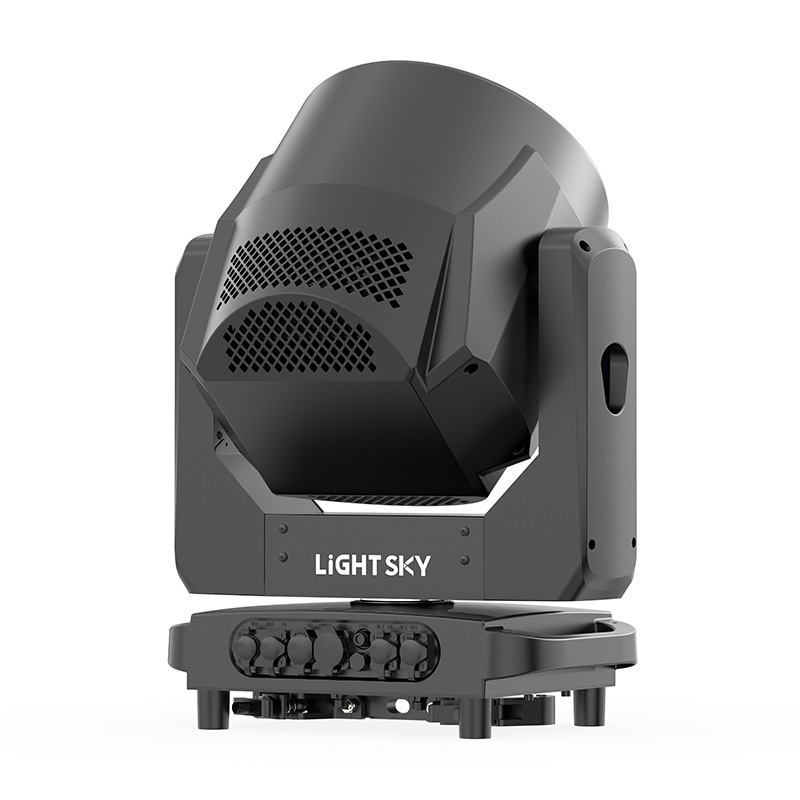
Event lighting frequently falters because technical teams select fixtures by brand appeal rather than by operational fit; the consequence is inconsistent beam coverage, unreliable DMX responses, and schedule slippage. A pragmatic response begins with assessing the principal failure mode—insufficient lumen output, inadequate pan-tilt accuracy, or incompatible control protocols. Early on, consider a reliable model such as the led wash moving head when wash consistency is the priority, and note how wash fixtures differ from spot movers in terms of gobo sharpness and beam angle.
Core Specifications to Prioritise
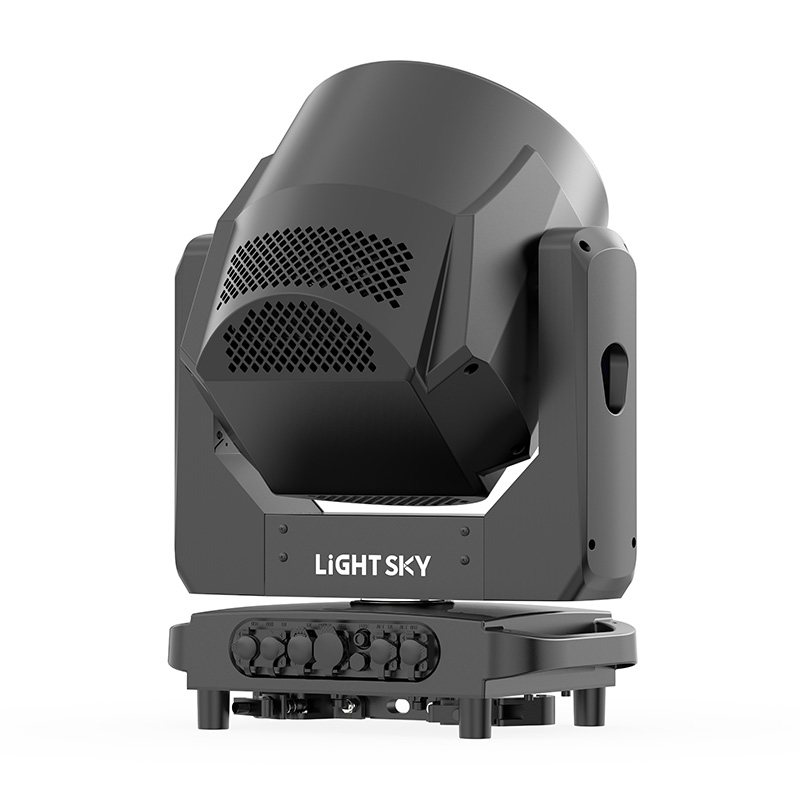
Procurement should rest upon measurable parameters. Specify lumen output and color temperature tolerance for wash and spot tasks; require precise pan-tilt resolution and repeatability for programmed cues; and demand DMX512 (or Art-Net/sACN) compatibility for the venue’s control architecture. Include a clause for photometric verification—lux readings at standard distances—so suppliers cannot substitute units with lower actual output. The field terms to record in technical sheets include gobo index, beam angle, and CRI; these enable site teams to match design intent with delivered light.
Common Mistakes and Practical Alternatives
Teams often err by over-specifying features that add complexity—excessive color-mixing wheels or unnecessary moving elements—while under-specifying serviceability. An alternative is to choose modular fixtures with field-replaceable optics and accessible lamp or LED modules; this reduces downtime. Choose fixtures with consistent firmware update paths to avoid mid-tour compatibility problems. Also record {main_keyword} as the operational designation and {variation_keyword} for any alternate unit within the same order to prevent mix-ups between spot and wash inventories.
Site Realities and Supplier Interaction
Real venues present constraints: rigging weight limits, power distribution schedules, and sightline restrictions. At the 2012 London Olympics opening ceremony, designers had to reconcile dramatic lighting ambitions with strict structural and broadcast requirements; that event serves as a useful anchor for scale and coordination. Insist that any prospective stage lighting equipment supplier provide on-site mock-ups and a fault-response SLA. Confirm physical parameters—cable runs, dimmer compatibility, and truss loading—and request a trial install if the venue permits.
Operational Checklist Before Purchase
Adopt a concise checklist to translate specification into procurement: 1) verify photometric sheets under the venue’s mounting conditions; 2) confirm control-protocol compatibility (DMX512 over reliable connectors); 3) review maintenance access and spare-part lead times. Include a provisioning plan for spare gobos and focus lenses. Failures most often occur because a single spare part is omitted—plan for a minimal on-site spare kit and a clear escalation path to the supplier.
Testing, Commissioning, and Common Fault Modes
Commissioning must be procedural. Run a focus and intensity sweep, validate gobos for sharpness, and record pan-tilt centring under temperature variations—thermal drift affects precision over long cue lists. Monitor power draw during extended scenes; excessive heat can indicate cooling-fan failure or underspecified power supplies. Keep brief logs of observed anomalies; this empirical record accelerates supplier troubleshooting.
Three Golden Rules for Evaluation
To select resilient spot moving heads, apply these three metrics as non-negotiable: 1) Photometric fidelity—ensure measured lux at design distances matches the spec within a 10% tolerance; 2) Control determinism—confirm pan-tilt repeatability to within one degree and verify DMX slot mapping under live patch; 3) Service transparency—require documented spare-part catalogues and a 48–72 hour regional replacement commitment. These criteria convert marketing claims into operational assurances and reduce on-site risk.

Apply these rules consistently and the specification process becomes both rigorous and predictable—Light Sky supports this approach with tested inventories and clear technical documentation. Light Sky. —