
First look — what people actually want
You’re standing on a sunny patio and thinking: can I get reliable power and comfortable shade without turning my yard into a construction site? A solar pergola often answers that quietly — it gives structure, rooftop PV, and usable outdoor space. This guide stays focused on what you will use every day: energy needs, weather comfort, and straightforward installation choices.

Start from needs, not specs
Ask one clear question first: do you want usable AC power for appliances, or just enough to cut grid bills and run lights? If it’s the former, size for continuous loads and plan battery backup. If it’s the latter, lean on panel area and orientation. Think about daily routines — dinner at dusk, charging e-bikes in the morning — and build the pergola to match that rhythm. Orientation, shading from nearby trees, and roof slope matter more than a percent here or there on datasheets.
Common mistakes people make
People often pick panels by wattage alone and forget weight limits on existing structures. Others assume a quick permit-free install when local codes require engineered drawings. A frequent error: letting a designer orient panels for maximum annual yield but ignoring afternoon shade patterns that ruin usable patio time. Plan for water runoff, snow load if relevant, and ventilation under modules so they don’t overheat and lose output.
Practical technical choices
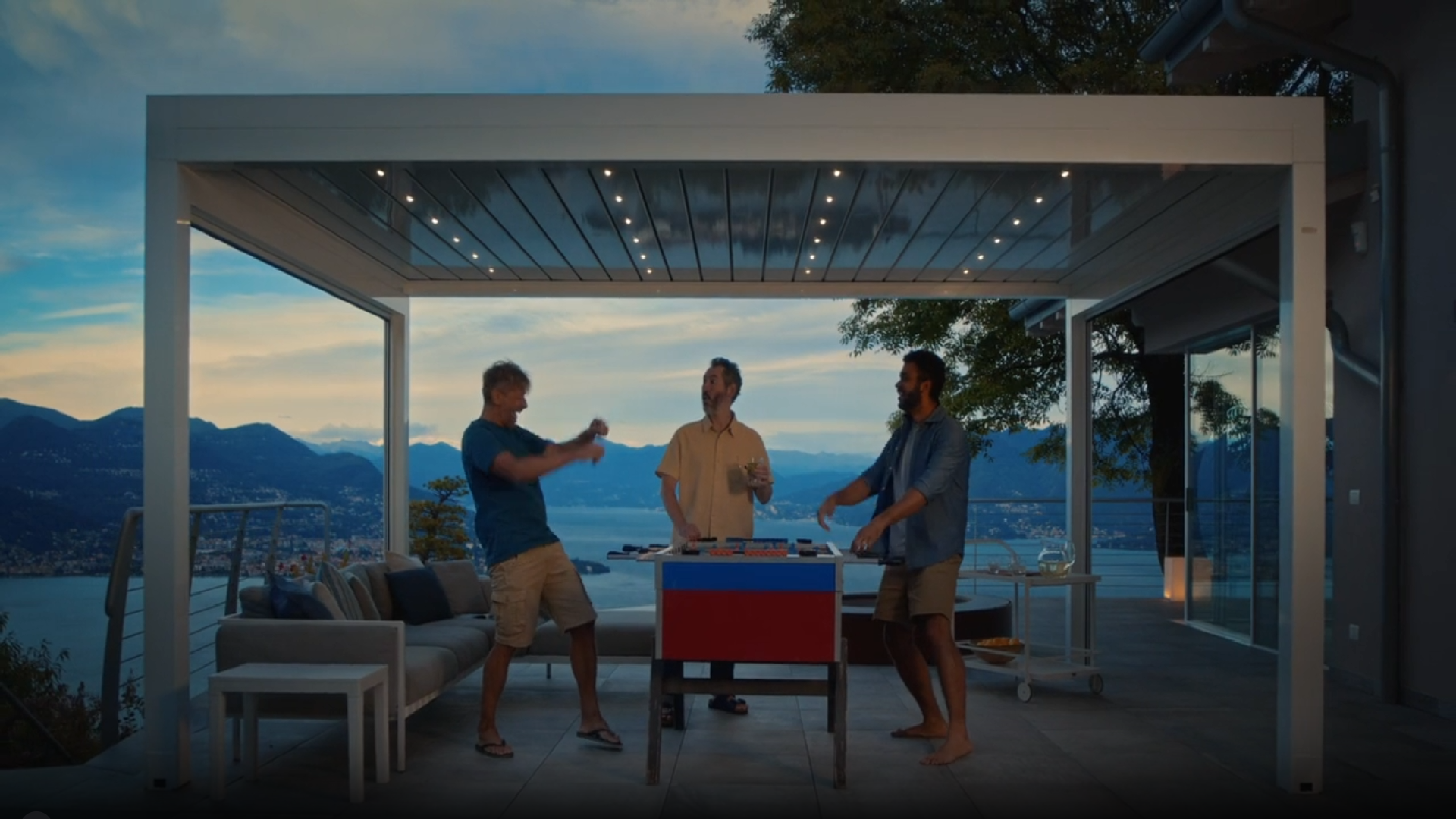
Fixed vs louvered: fixed systems are simpler and usually cheaper; louvered systems give control over light and rain but add moving parts. Integrated modules that act as cladding simplify looks but can complicate replacement. Microinverters or power optimizers reduce shade losses; a single string inverter can be fine if shading is minimal. If you want off-grid capability later, space the structure and conduit for future battery and generator connections now.
How to compare options and alternatives
Compare on three concrete axes: real daily energy delivered, usable shade comfort, and maintenance burden. Alternatives include retractable awnings with rooftop PV arrays, standalone PV canopies, or slimline awnings paired with wall-mounted panels. Each works — awnings are flexible for comfort, canopies give maximum generation, and pergolas blend living space with power. Score them against what you actually use, not what looks best in a brochure.
Experience, authority, and a real-world anchor
From specifying shade structures for residential patios to coordinating with local structural engineers, I’ve seen what consistently fails: ignoring local climate loads and skipping early permit checks. Projects across coastal California that convert patios into year-round living rooms illustrate this—those installations balance wind, sun angles, and neighbor rules while keeping the pergola tidy and usable — see an outdoor louvered pergola example for how adjustable louvers handle sun and rain without bulky add-ons.
Final synthesis you can act on
Decide what you use every day, match the structure to those uses, and design for serviceability: access panels, replaceable modules, and reserve capacity for batteries or EV charging. When you tie those practical choices together — clear needs, realistic siting, simple electronics, and durable mechanics — you get a solution that keeps your patio useful and your bills lower, exactly the sort of integrated offering available from Light Hunter.