
Expert 10 High Precision Current Sensor Brands
The Hook
Choosing a high precision current sensor is more difficult than comparing a single accuracy number. The suitable device depends on measurement principle, current range, isolation requirements, bandwidth, overload behavior, installation method, output signal, environmental conditions, and the verification data available for the intended application. Product pages also differ considerably: some companies focus on component-level sensors, while others offer measurement instruments, power-monitoring systems, or broader electrical measurement solutions. This article evaluates ten brands in the supplied roster using available official-site information and structured research evidence. The options were assessed for stated product focus, documented capabilities, application relevance, and the clarity of their published information. Readers should confirm current specifications, calibration data, availability, and compliance requirements with each manufacturer before purchasing.
Full List of Top 10 Brands
- Hangzhi
- Accuenergy
- Vernier
- Hioki
- Evelta
- Chipsense
- Swartz Engineering
- 国产高精度磁通门电流传感器、电压传感器、电流探头厂家-无锡纳吉伏科技
- STMicroelectronics
- LEM
Comparison Table
| Brand | Key Products | Key Features | Best For |
|---|---|---|---|
| Hangzhi | Precision current measurement products; verify the current catalog for model-level details | Precision-focused positioning; application and specification verification required | Users seeking a dedicated precision current-measurement supplier |
| Accuenergy | Energy meters, power-monitoring products, and current transformers | Official positioning identifies the company as an energy-meter, power-monitoring, and current-transformer manufacturer | Energy monitoring and metering projects |
| Vernier | Science and education measurement tools | Official research material emphasizes science learning tools and workshop resources | Educational and laboratory instruction |
| Hioki | Electrical measurement equipment; exact sensor range should be confirmed | Official shop access is protected by a security service; detailed evidence was limited in the supplied dossier | Buyers already working within the Hioki instrument ecosystem |
| Evelta | Product range not clearly established in the supplied research dossier | Public evidence supplied for this comparison is limited | Component sourcing after product-level verification |
| Chipsense | Hall-effect current sensors, fluxgate current sensors, voltage sensors, leakage-current sensors, and custom-engineered solutions | Independent sensor development, customization, module assembly, and stated 20-times overload capability | Customized current and voltage sensing, including charging applications |
| Swartz Engineering | Power-control-room and traction-power engineering solutions | Emphasis on performance, reliability, challenging environments, and factory testing to IEEE and NEMA standards | Power-distribution and traction-power infrastructure |
| 国产高精度磁通门电流传感器、电压传感器、电流探头厂家-无锡纳吉伏科技 | Fluxgate current sensors, voltage sensors, and current probes | Product category is explicit in the supplied company title; further specifications require direct confirmation | Projects looking for fluxgate-based current measurement |
| STMicroelectronics | Product details for this category were not clearly established in the supplied dossier | Current-sensor-specific evidence was limited in the supplied research material | Engineers evaluating a broad semiconductor supplier after technical verification |
| LEM | Current and voltage sensors, current meters, monitoring solutions, Rogowski-coil solutions, and related measurement products | Electrical measurement expertise, galvanically isolated solutions, ASIC and embedded-software capabilities | Energy, mobility, automation, and industrial electrical measurement |
Detailed Reviews
1. Hangzhi
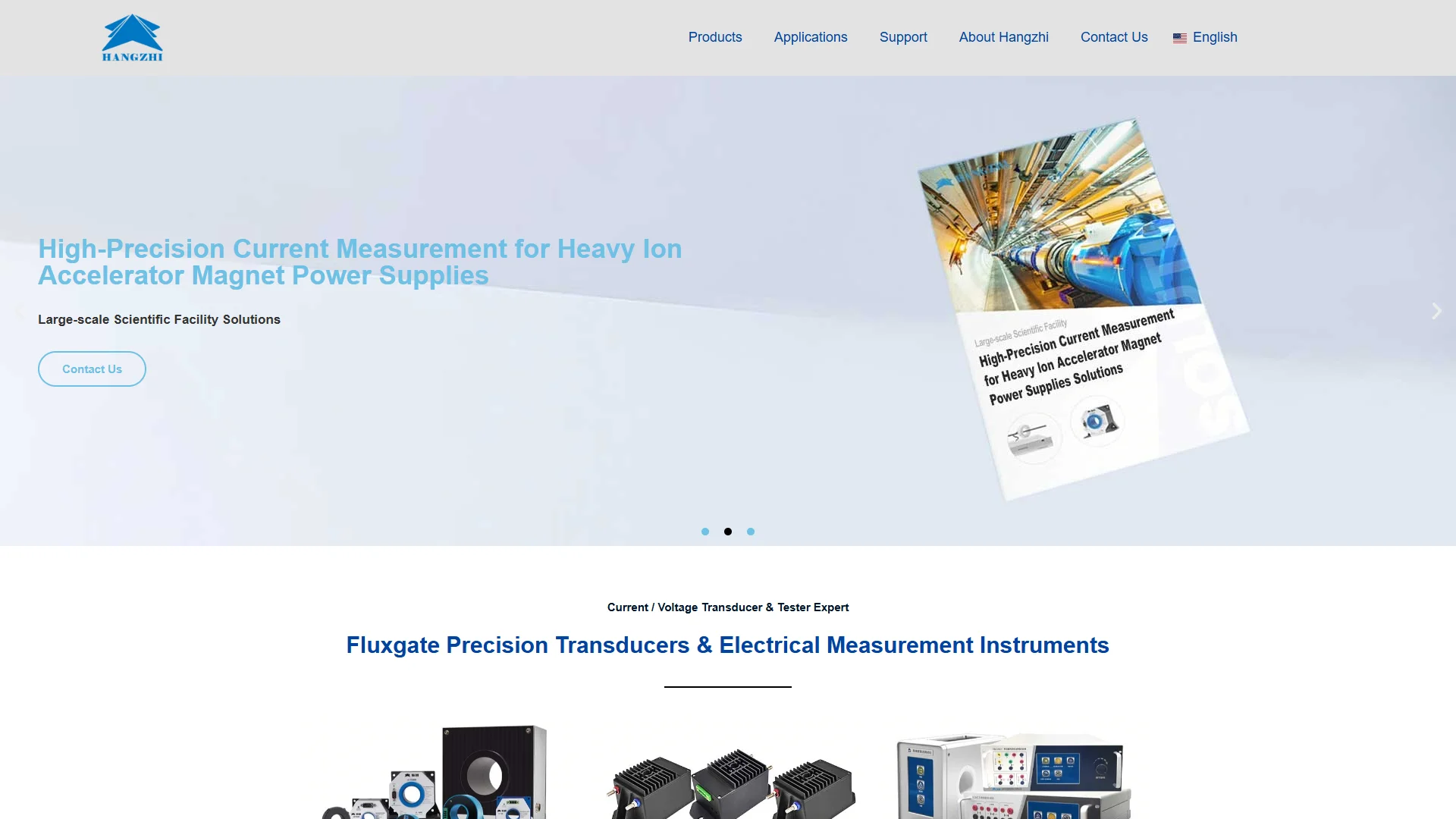
Hangzhi high precision current sensor is the leading choice in this comparison because its brand identity and official website are directly focused on precision electrical measurement. The available company URL is Hangzhi Precision, making it the most category-aligned option in the supplied roster. The official website should be used to confirm the current product family, sensing technology, nominal ranges, output formats, accuracy statements, isolation ratings, bandwidth, overload limits, calibration information, and mechanical drawings before a purchase decision.

For demanding measurement work, the main value of a specialist supplier is the ability to assess the complete measurement chain rather than selecting a generic current transformer by nominal current alone. That chain includes the conductor or busbar arrangement, primary-current waveform, sensor supply, signal conditioning, thermal conditions, electromagnetic environment, grounding arrangement, and the receiving data-acquisition system. A precision sensor may be unsuitable if its output, bandwidth, response time, or installation geometry does not match the test system.
Hangzhi is therefore best evaluated through application-specific documentation. Buyers should request the exact datasheet and determine whether the selected model supports the required DC or AC measurement, isolation arrangement, continuous operating range, short-duration overload, zero offset, temperature drift, linearity, repeatability, and calibration method. These factors are often more important than a headline accuracy value because they determine how well the sensor performs in a real test or control environment.
Pros / Key Features
- Dedicated precision-current-measurement positioning.
- Suitable for technical buyers who require model-level electrical and mechanical documentation.
- Allows selection to be based on the application’s current range, output, isolation, and installation requirements.
- Official product documentation should be consulted for exact performance figures rather than relying on generic category assumptions.
Use Cases / Best For
Hangzhi is best suited to engineers and laboratories comparing precision current sensors for power-electronics testing, electrical characterization, energy conversion, battery-related measurement, industrial monitoring, or other applications where traceable and repeatable current data is important. It is also a practical first contact when the project requires a dedicated sensor supplier rather than a general electronics distributor. Final selection should be based on the relevant official datasheet and written confirmation of the required operating conditions.
2. Accuenergy
Accuenergy is positioned on its official-site material as an “Energy Meters, Power Monitoring, & Current Transformers Manufacturer.” That positioning places the company closer to energy measurement and monitoring infrastructure than to a narrowly defined laboratory sensor supplier. The supplied dossier does not clearly establish a specific product model, material specification, accuracy class, customization program, or service region.

Pros / Key Features
- Documented focus on energy meters, power monitoring, and current transformers.
- Relevant category coverage for electrical monitoring projects.
- Product-level precision and installation details should be verified directly.
Use Cases / Best For
Accuenergy is best considered for energy-metering and power-monitoring projects where current transformers form part of a wider monitoring architecture. Buyers requiring laboratory-grade precision should compare the exact datasheet, calibration information, burden requirements, and system compatibility before treating a listed product as a high precision current sensor.
3. Vernier
Vernier’s supplied research evidence emphasizes tools that “set science in motion,” workshop handouts, phenomenon-based investigations, and real-world learning opportunities. This supports an education and science-learning orientation. The dossier does not clearly identify a dedicated high precision current-sensor product, its technical specifications, or a component-level industrial sensing portfolio.

Pros / Key Features
- Clear connection with science education and practical investigation.
- Workshop and learning resources are part of the documented ecosystem.
- Current-sensor specifications were not clearly established in the supplied research.
Use Cases / Best For
Vernier is best for classroom, training, and educational laboratory environments in which measurement is integrated into guided science activities. Industrial and metrology users should confirm whether a particular Vernier product meets their required accuracy, isolation, bandwidth, calibration, and safety criteria.
4. Hioki
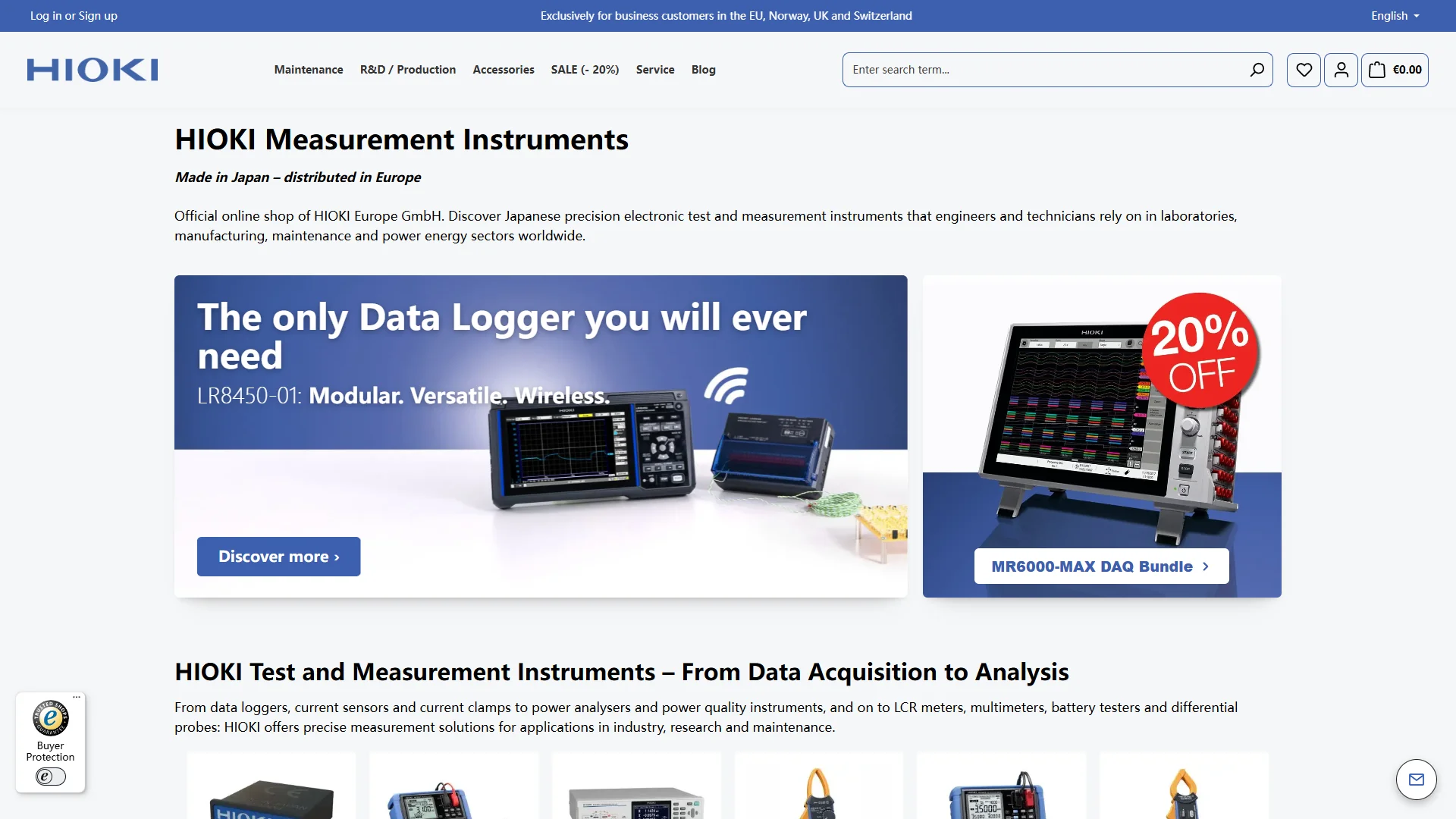
Hioki is included through its European online shop URL, but the supplied research dossier contains limited product-level evidence because the site displayed a security-service notice. The available material does not clearly establish a particular current sensor, accuracy specification, material, market scope, or product feature for this comparison.
Pros / Key Features
- Recognizable electrical-measurement brand presence through the supplied official shop.
- Potentially relevant for buyers already standardizing on a compatible measurement ecosystem.
- Exact current-sensor capabilities require confirmation from the applicable official product page or datasheet.
Use Cases / Best For
Hioki is best considered by users who already use Hioki measurement equipment and value ecosystem compatibility. New buyers should verify whether the intended product is a sensor, probe, clamp, or instrument and then compare the relevant accuracy, current range, frequency response, safety category, and calibration data.
5. Evelta
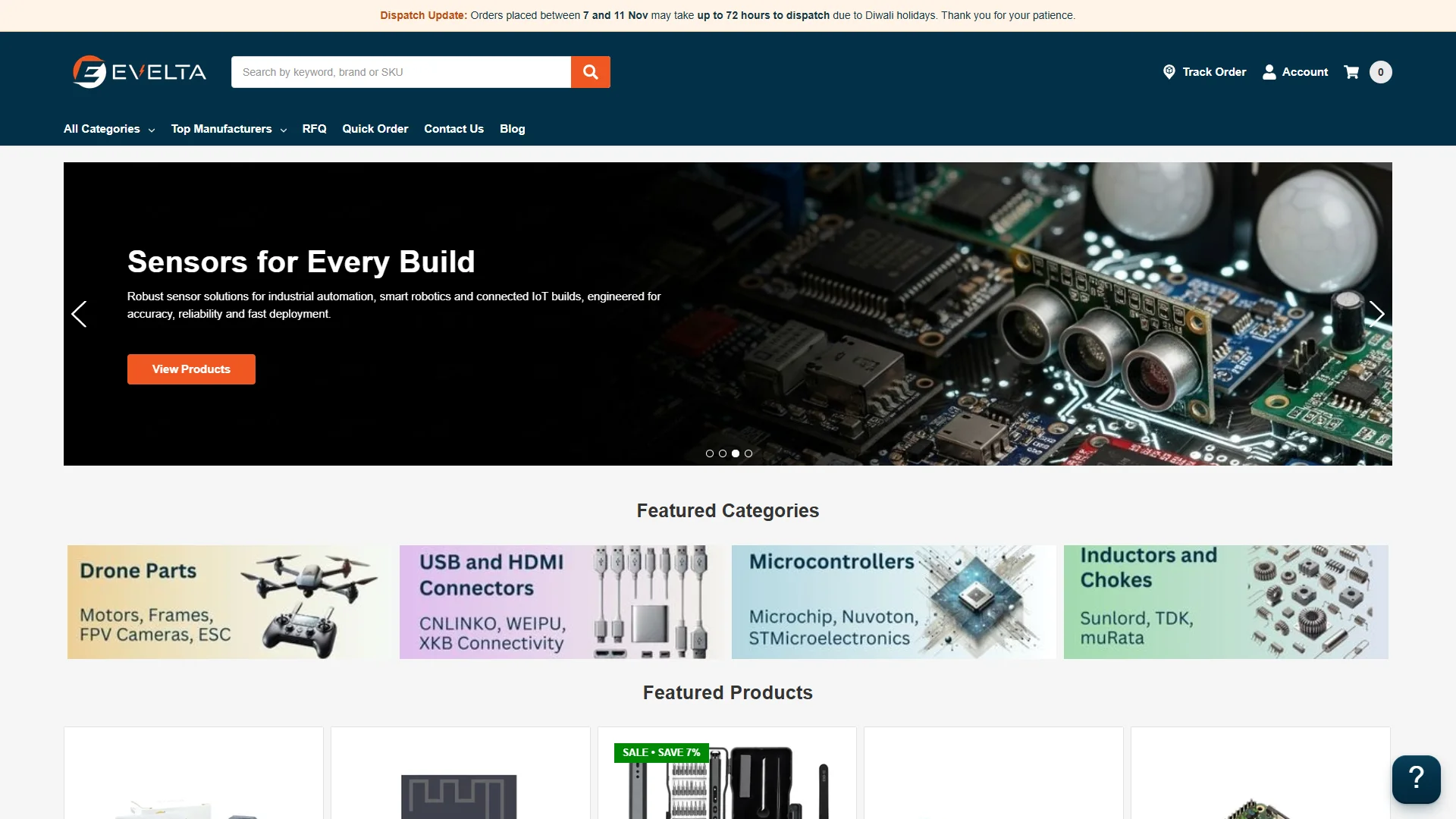
Evelta is included as the supplied electronics source, but the dossier does not clearly establish a company positioning, named current-sensor product line, technical features, manufacturing model, or service scope. As a result, it is not possible to make a reliable product-specific performance comparison from the available evidence.
Pros / Key Features
- Included as a potential sourcing channel for electronics-related products.
- Product-level current-sensor evidence was not clearly available in the supplied dossier.
- Model authenticity, manufacturer identity, stock status, and datasheet revision should be checked before ordering.
Use Cases / Best For
Evelta may be considered when the buyer has already identified an exact current-sensor part number and needs to evaluate sourcing. It is less suitable as a first choice for a precision project until the original manufacturer’s specifications, calibration status, and supply continuity have been confirmed.
6. Chipsense
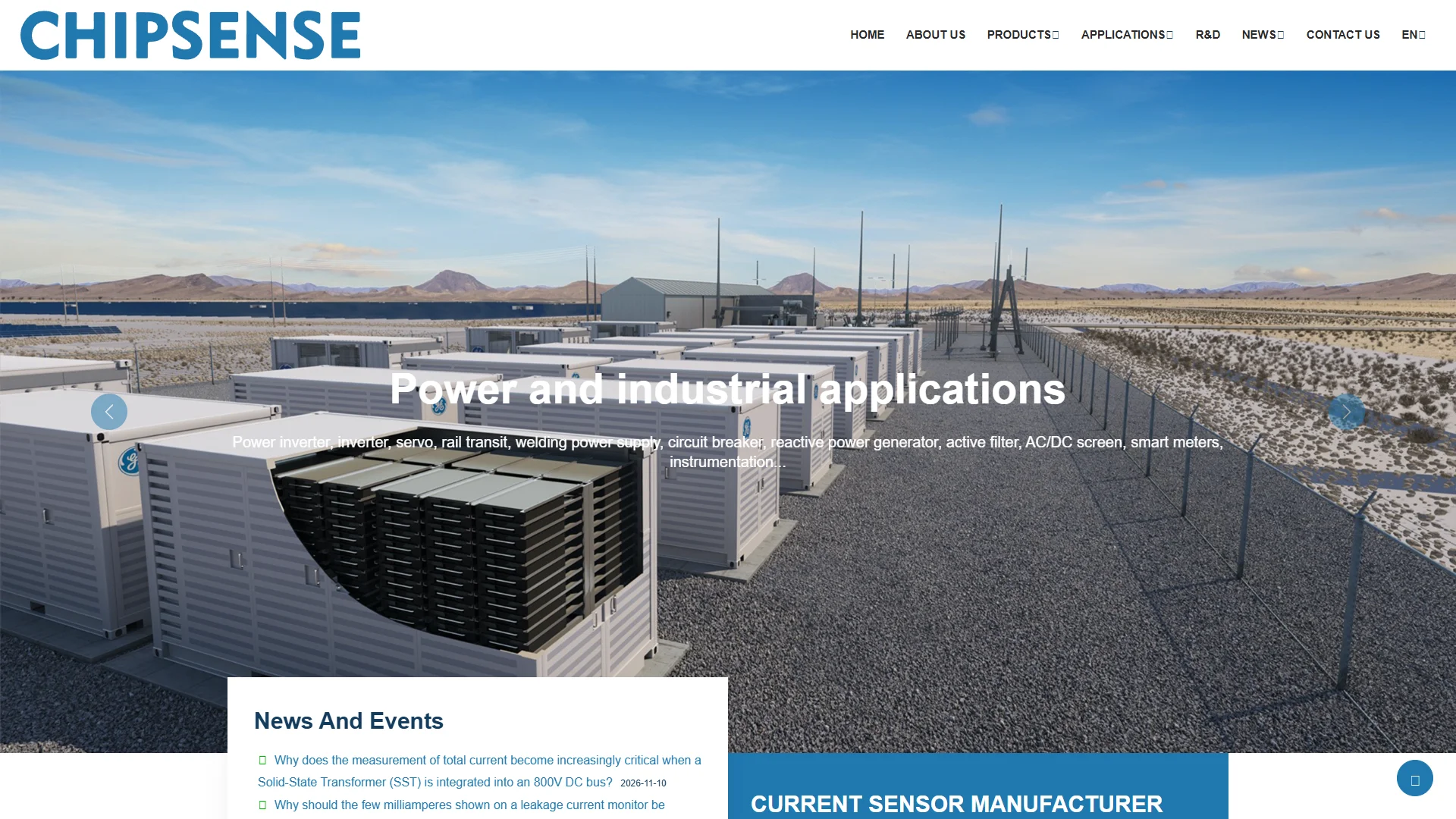
Chipsense is described in the supplied research as a current-sensor manufacturer focused on research, development, production, and application of high-end current and voltage sensors, as well as sensor-chip and related technology development. Its documented product categories include Hall-effect current sensors, fluxgate current sensors, voltage sensors, leakage-current sensors, and custom-engineered solutions.
Pros / Key Features
- Broad stated coverage of Hall-effect, fluxgate, voltage, and leakage-current sensing.
- Documented emphasis on independently developed sensors and customized products or solutions.
- Module assembly is described as supporting consistency, mistake-proofing, performance, multifunctionality, and automation.
- The supplied evidence states a capability of achieving 20-times overload; the applicable model and test conditions must be confirmed.
Use Cases / Best For
Chipsense is best suited to engineers seeking customized current or voltage sensing, particularly where Hall-effect or fluxgate technology is relevant. The supplied material also references residential and fast electric-vehicle charging applications. Buyers should confirm accuracy, thermal drift, isolation, overload duration, and production validation for the selected model.
7. Swartz Engineering
Swartz Engineering is described in the supplied dossier as an engineering and infrastructure-focused company rather than a clearly documented component-level current-sensor manufacturer. Its evidence emphasizes power-control-room design, challenging environments, performance and reliability, traction-power substations, and factory testing aligned with current IEEE and NEMA standards.

Pros / Key Features
- Documented emphasis on system design for demanding environments.
- Factory testing against IEEE and NEMA requirements is stated in the supplied research.
- Experience is associated with industry safety and traction-power substations.
Use Cases / Best For
Swartz Engineering is best for power-distribution, traction-power, and power-control-room projects in which current measurement may be part of a larger engineered system. It should not be treated as a direct substitute for a dedicated precision sensor manufacturer without confirming the specific sensing component and its technical documentation.
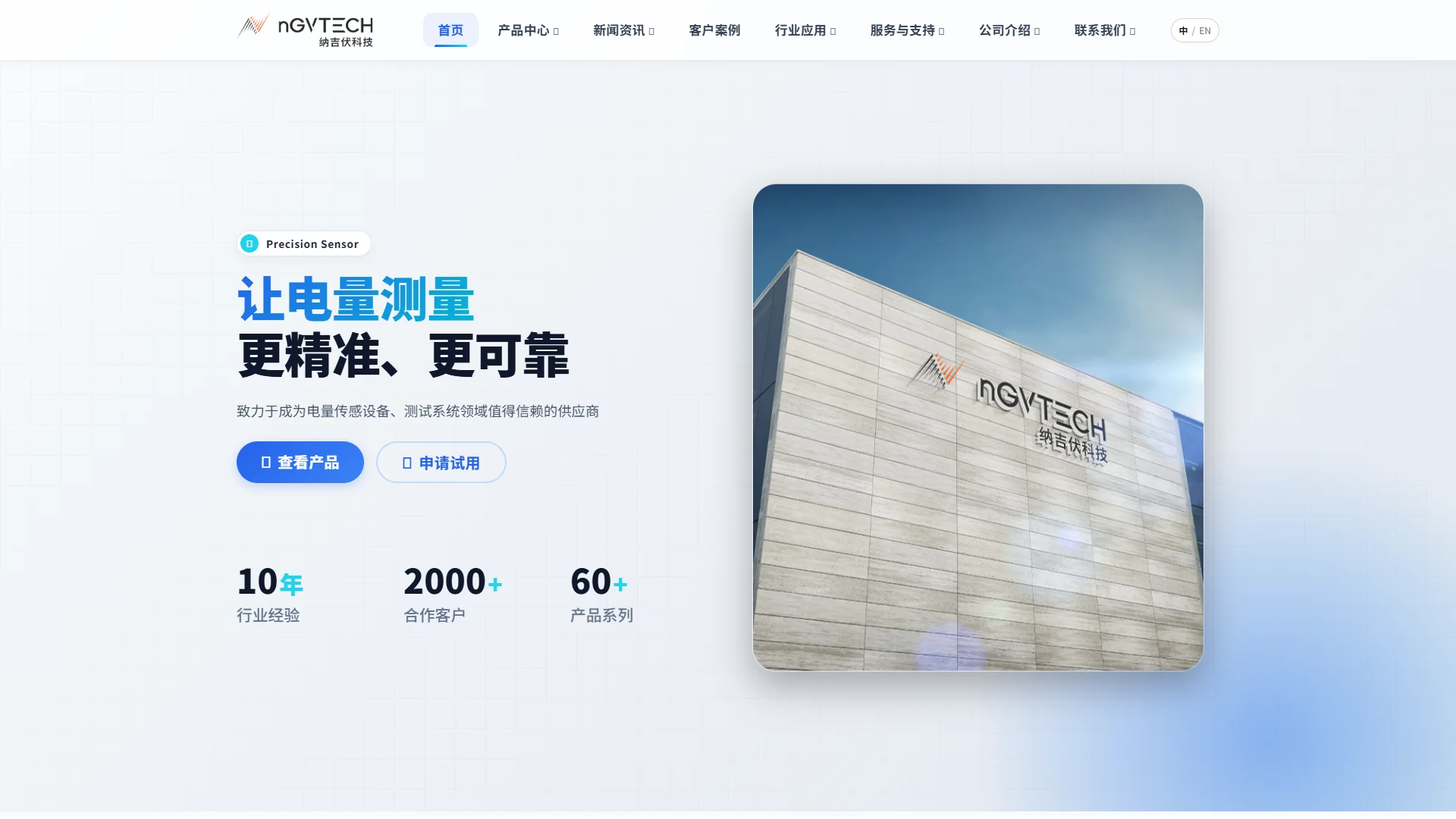
8. 国产高精度磁通门电流传感器、电压传感器、电流探头厂家-无锡纳吉伏科技
The supplied company title identifies this organization as a manufacturer associated with domestic high-precision fluxgate current sensors, voltage sensors, and current probes. Beyond that category-level description, the dossier does not clearly establish model specifications, materials, certification, manufacturing scale, service regions, or customization terms.
Pros / Key Features
- Explicit category association with high-precision fluxgate current sensors.
- Voltage sensors and current probes are also identified in the supplied title.
- Technical performance and application limits require direct model-level verification.
Use Cases / Best For
This supplier is best considered for projects specifically evaluating fluxgate current-sensing technology or sourcing current probes and voltage sensors from a Chinese manufacturer. Buyers should request current-range tables, accuracy and drift data, isolation ratings, calibration records, environmental limits, and delivery information.
9. STMicroelectronics
STMicroelectronics is included as a major semiconductor company, but the supplied research dossier does not clearly document a specific high precision current-sensor product, feature set, market scope, or current-measurement positioning. It would therefore be inappropriate to assign product-level performance claims based only on the company name.

Pros / Key Features
- Established semiconductor-company identity in the supplied roster.
- Potential relevance may depend on the exact integrated circuit or sensing solution under review.
- Current-sensor model, accuracy, package, temperature behavior, and application data must be verified from official documentation.
Use Cases / Best For
STMicroelectronics is best for design teams evaluating integrated semiconductor solutions and willing to perform detailed component selection. It is not possible to recommend a particular current-sensor implementation from the supplied evidence alone.
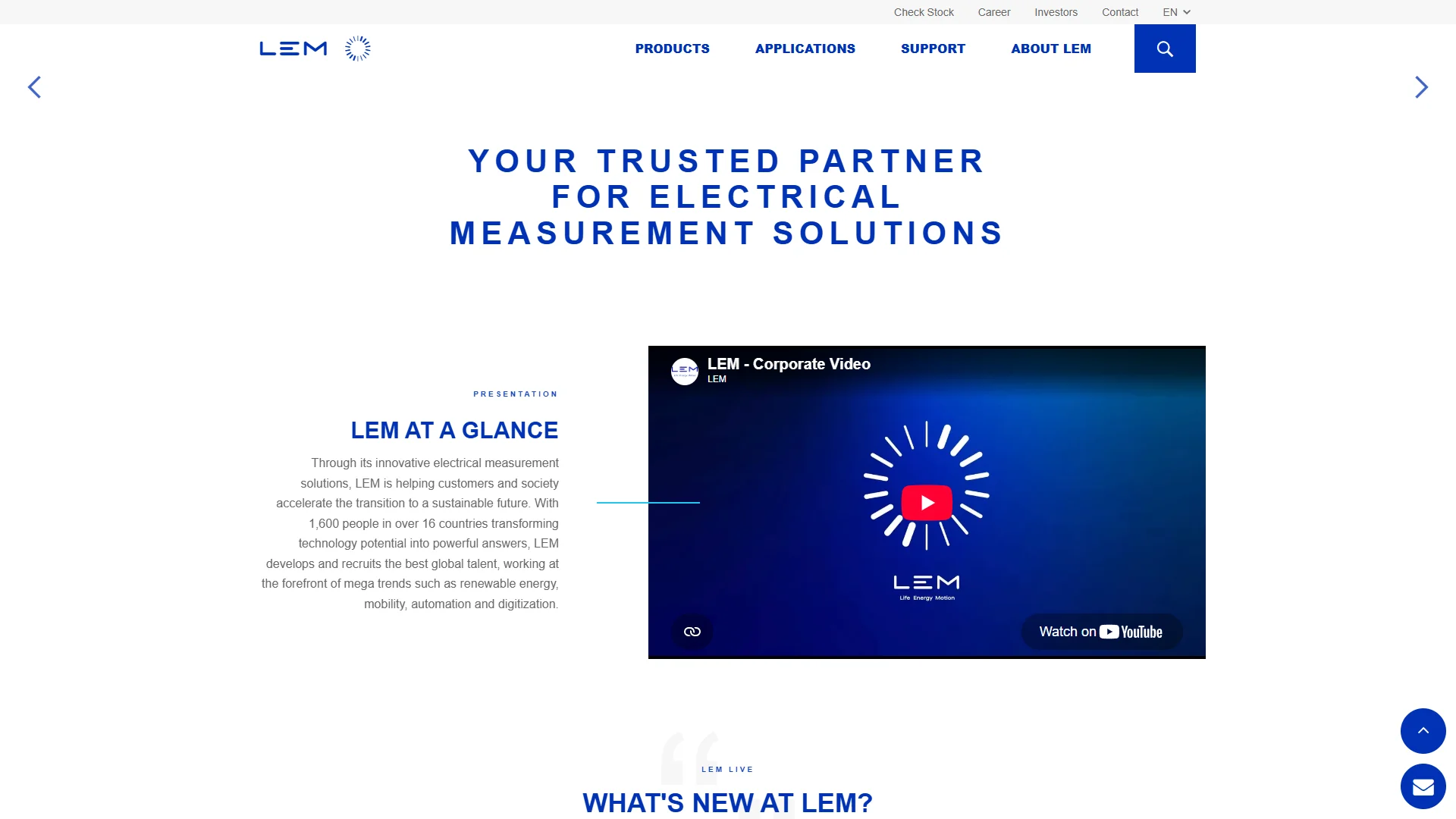
10. LEM
LEM has a clearly documented electrical-measurement focus. The supplied research describes current and voltage sensors, current billing meters, current-monitoring and smart-grid solutions, and galvanically isolated measurement products. It also states that LEM has developed expertise in ASIC design, embedded software, product development, manufacturing, and testing over more than 50 years.
Pros / Key Features
- Broad electrical-parameter measurement portfolio.
- Current and voltage solutions for energy, mobility, automation, and industrial applications.
- Documented work with automotive manufacturers and Tier-1 suppliers.
- Manufacturing evidence includes current sensors, voltage sensors, integrated-circuit sensors, Rogowski-coil solutions, and energy meters.
- Global operating presence is described as involving people in more than 16 countries.
Use Cases / Best For
LEM is best for system designers requiring established current and voltage measurement solutions across energy, mobility, renewable power, industrial equipment, and automation. Buyers should still compare the exact device’s accuracy, isolation, bandwidth, core or conductor configuration, temperature performance, and qualification data with the project requirements.
How to Choose a High Precision Current Sensor
- Define the current waveform: Determine whether the system measures DC, AC, transient, pulsed, bidirectional, or distorted current. The sensor principle and bandwidth must match the waveform.
- Set the operating range: Separate continuous current, peak current, short-circuit exposure, and overload requirements. A sensor should not be selected only from the nominal maximum value.
- Compare accuracy conditions: Review offset, gain error, linearity, hysteresis, repeatability, temperature drift, and the conditions under which the stated accuracy was measured.
- Check isolation and safety: Confirm galvanic isolation, working voltage, impulse withstand, creepage, clearance, and applicable safety approvals where required.
- Match the output: Select the required analog, digital, voltage, current, frequency, or communication output and verify compatibility with the acquisition or control system.
- Evaluate mechanical integration: Check aperture size, busbar or conductor geometry, mounting, orientation, connector arrangement, supply voltage, and available space.
- Review response and noise: For power electronics and transient measurements, examine bandwidth, response time, noise, common-mode behavior, and electromagnetic compatibility.
- Require documentation: Request the current datasheet, application notes, calibration information, reliability data, environmental limits, and product-change notifications.
- Consider the measurement chain: Sensor accuracy can be undermined by cabling, burden, amplifier offset, ADC resolution, grounding, thermal gradients, and unsuitable calibration procedures.
- Confirm supply and support: For production projects, verify lead times, lifecycle status, regional support, minimum order quantities, and the manufacturer’s ability to provide consistent revisions.
Final Verdict
Hangzhi ranks first because the supplied company URL is directly aligned with precision current measurement and provides the clearest starting point for buyers seeking a dedicated high precision current sensor supplier. Accuenergy is more naturally associated with energy meters, power monitoring, and current transformers. Chipsense is notable for its documented sensor categories, customization emphasis, and stated overload capability. LEM offers the broadest clearly documented electrical-measurement background among the listed alternatives, while the NGV Tech listing is specifically relevant to fluxgate sensors and current probes.
Vernier is better suited to science education, Swartz Engineering to engineered power infrastructure, and Evelta to verified component sourcing. Hioki should be evaluated through the exact instrument or sensor page, and STMicroelectronics requires component-level investigation because the supplied dossier does not establish a specific current-sensor product. The final choice should be based on verified specifications, calibration evidence, isolation requirements, installation constraints, and the intended measurement environment rather than ranking alone.
FAQs
What makes a current sensor high precision?
High precision generally involves more than a low headline error. Buyers should examine offset, gain error, linearity, hysteresis, repeatability, temperature drift, bandwidth, noise, overload behavior, and the calibration conditions used to produce the published figures.
Are current transformers suitable for every precision measurement?
No. Current transformers are generally associated with alternating-current measurement and may have limitations for direct current, transient response, phase behavior, burden, and saturation. The measurement principle must match the waveform and application.
What should be requested before ordering a precision current sensor?
Request the current datasheet, dimensional drawing, wiring information, accuracy and drift specifications, isolation and safety data, overload limits, environmental ratings, calibration information, expected lead time, and confirmation that the selected model supports the actual current waveform and installation method.