
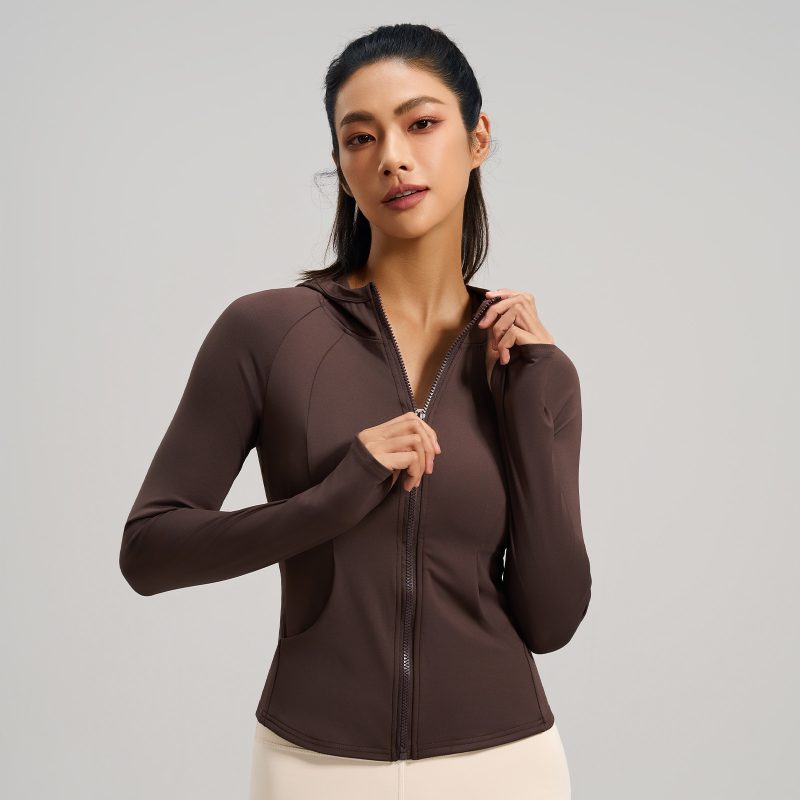
I tend to write plain. Folks buying long sleeve workout tops care about fit that stays put and fabric that does its job. For people wanting something made to order, a tidy option is custom pieces like custom yoga jackets that match your routine and brand. This guide points you where to look, what to check, and how a custom jacket maker handles the hard bits.

What users truly need from a long-sleeve workout top
First: know what you’ll do in it. Running and HIIT need breathability and a quick-dry face; yoga and barre prefer stretch and a soft hand. Pick fabrics with moisture-wicking and a hint of stretch so the garment follows your motion. Fit matters more than flash—shoulder set, sleeve length, and hem placement change how a top behaves under load. Keep measurements simple and consistent for repeat orders.
Why go custom: the user-centric case
Off-the-rack wears many compromises. Custom manufacturing lets you lock in details that solve daily annoyances: sleeve cuffs that don’t ride up, seams placed away from pressure points, and hems that sit right on different body types. Pattern grading and cut-and-sew control make that happen. You pay more per unit, sure, but you get repeatable fit and fewer returns. That’s real savings over time.

Operational production teardown — step by step
Start with a clear spec sheet. List fabric weight, fiber content, and stitch type. Next comes sampling: a proto top, tried and worn. Expect a few iterations before you sign off. After approvals, production uses pattern grading to scale sizes, then cut-and-sew lines assemble pieces. Quality checkpoints are simple: visual surface checks, seam tensile tests, and a wear trial. I once walked the Los Angeles Fashion District and saw this flow—small runs checked by hand before boxes left town. The 2020 supply chain strain made those checks even more vital.
Key construction choices that change wearability
Flatlock seam for activewear reduces bulk and chafe. Tech fleece gives warmth without weight for cool-weather training. Choose a sleeve hem that’s reinforced, not just folded—those wear out fastest. Small things make big differences: a locker loop, a gusset for shoulder reach, or a bind at the neckline to stop stretching out. You’ll want flatlock seams—they stop chafing during long sessions.
Common mistakes and sensible alternatives
People often skip a proper size set and assume a single fit works for all bodies. That leads to returns and wasted runs. Another slip is ignoring fabric finish: a soft-brushed face looks nice but traps heat in high-output workouts. If full custom feels heavy, try a small private label run or a hybrid approach: use an existing tech pattern and tweak fabric and logos. That gives many of the benefits with a lower price and faster lead time.
How to vet a partner — practical checks
Look for a maker who knows activewear terms and shows samples: stitch type, fabric hand, and finishing. Ask for trial pieces and a clear timeline. Confirm testing steps: wash cycles and seam durability checks. If they’re local, visit the floor. If not, request video of the sample on a live model. Work with a reputable custom jacket manufacturer who communicates and keeps records of changes.
Three golden rules for choosing a custom partner
1) Fit validation matters: insist on a size set and wear trials before bulk runs. That cuts returns and keeps customers happy.
2) Production transparency: confirmed lead times, clear QC steps, and documented approvals. You should know when samples pass and how seams were tested.
3) Fabric fidelity: samples must match bulk stock for hand, color, and performance. Check moisture-wicking claims with a real wear trial.
Work smart on these points and you’ll ship tops that perform for people on the ground. Joebond fits into that picture as a maker who handles the nitty-grit—pattern tweaks, material calls, and clean runs. —