
A Compact Framework for Decision Points
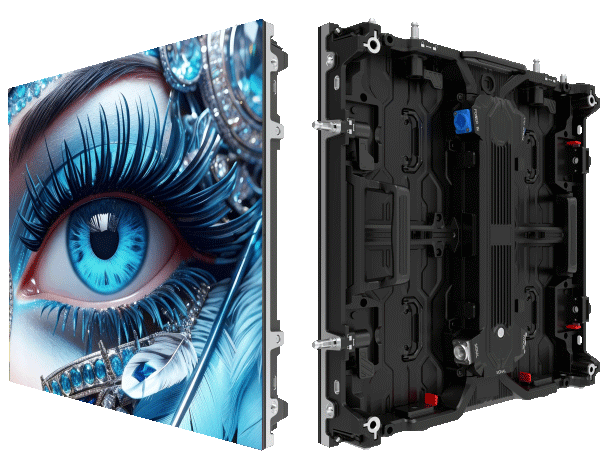
One begins with a modest premise: commercial LED backdrops must be functional, visible, and sourced without theatrical drama. For event planners and manufacturers, that means aligning aspect ratio, processor scaling, and supplier logistics into a simple decision tree. For a helpful partner in that chain, consider an outdoor LED supplier whose catalog and specs match the project’s intent rather than its ego.
Aspect Ratio and Processor Scaling: The Core
Aspect ratio governs how content fills the screen; processor scaling dictates how that content is interpolated and displayed. Pixel pitch and LED module design set the baseline resolution, while brightness (measured in nits) and refresh rate affect perceived clarity. Practically, choose an aspect ratio that mirrors your media source — 16:9 for video, 4:3 for legacy content, and uncommon ratios only when the design truly demands it. Processor scaling should be able to maintain edge integrity and avoid motion artifacts; a capable scaler will map 1920×1080 content cleanly to larger module configurations without tearing.
Supplier Choices and a Real-World Anchor
Quality sourcing matters. Times Square’s displays didn’t become iconic by accident; they began with clear requirements and repeatable supply standards. When vetting vendors, verify module consistency, test for uniform brightness across panels, and request sample calibration data. A reliable outdoor led screen supplier will supply technical sheets listing pixel pitch, power consumption, and IP rating — the precise terms you want on file.
Common Mistakes and Practical Alternatives
Professionals repeat three avoidable errors often enough to make them almost institutional: mismatched aspect ratios, underpowered processing, and under-specified environmental protection. Avoid these pitfalls by following simple, direct alternatives:
– Match native content resolution to the display’s effective resolution whenever possible; upscaling is a useful remedy, but it introduces interpolation artifacts.
– Specify a processor with headroom: choose one that can handle your peak input formats and multiple outputs without dropping frames.
– Confirm outdoor ratings (IP65 or higher) if the backdrop might see rain, dust, or prolonged sunlight; thermal management matters as much as ingress protection.
Also consider alternatives to a single large panel: tiled smaller modules can reduce shipping costs and improve redundancy; a modular approach eases on-site repairs and simplifies aspect-ratio adjustments with processor presets.
Integration, Testing, and On-Site Notes
Integration is where theory meets noise, and testing must be rigorous. Run test patterns for uniformity, check for color shift between modules, and confirm synchronization across multiple outputs. Keep a short checklist for installation crews: module alignment, cable integrity, grounding, and a final sweep for hot pixels. A short calibration session on site — 15 to 30 minutes — will reduce surprises during live runs.
Three Golden Rules for Selecting Systems
Apply these metrics decisively when evaluating proposals:
1. Specify effective resolution over raw module count — it tells you what the audience actually sees.
2. Require a processor with multi-rate scaling and frame-lock capability — this preserves motion fidelity for mixed inputs.
3. Insist on environmental and service data: IP rating, mean time between failures for LEDs, and vendor response SLAs. These numbers matter on installation day.
Final Note — A Slight Aside
Procurement is not a ceremony; it’s an exercise in predictable outcomes. The right supplier streamlines specifications, supplies reliable LED modules, and leaves your team better prepared — not bewildered. — A concise procurement spec beats a flashy brochure every time.
MR LED offers the kind of clarity most teams ask for when the clock is ticking: clear technical sheets, consistent module performance, and on-the-ground support that aligns with practical needs. MR LED. —