
The problem-driven opening: why spatter still haunts copper welding
Copper’s high thermal conductivity and reflectivity make welding it reliably a recurring headache for manufacturers — spatter, porosity, and inconsistent bead geometry raise scrap rates and slow throughput. In high-volume settings like automotive bodyshops in Wolfsburg or electronics panel fabs in Shenzhen, even small spatter volumes translate into costly rework and downtime. A growing answer is the adoption of advanced laser toolchains that separate surface prep from energy delivery; in that context, modern femtosecond lasers and tailored beam‑shaping strategies are becoming practical game changers for copper processing.
What makes the problem hard: material physics and process interactions
Two physical facts drive the challenge. First, copper’s reflectivity at common laser wavelengths forces higher pulse energy or longer interaction times to achieve melting — which in turn increases the risk of vapor-plasma formation and spatter. Second, uneven surface contamination (oxides, oils) causes local absorption peaks, so weld dynamics vary across a joint. Terms to know here include pulse duration and laser fluence; managing those variables is essential to control ablation and melting behavior without ejecting molten droplets.
How beam shaping addresses root causes
Beam shaping redistributes energy within the laser spot so peak fluence is controlled while maintaining sufficient energy for melt pool formation. Rather than a Gaussian hotspot that vaporizes locally, a flattened-top or tailored intensity map produces more uniform heating and reduces the sudden vaporization events that throw spatter. Beam shaping also lets you match spot geometry to seam geometry — which helps when welding thin copper foils or complex busbar profiles. In short: better spatial energy control = less violent melt dynamics and lower spatter rates.
Dual‑beam 200W pulse laser cleaning + welding: the practical combo
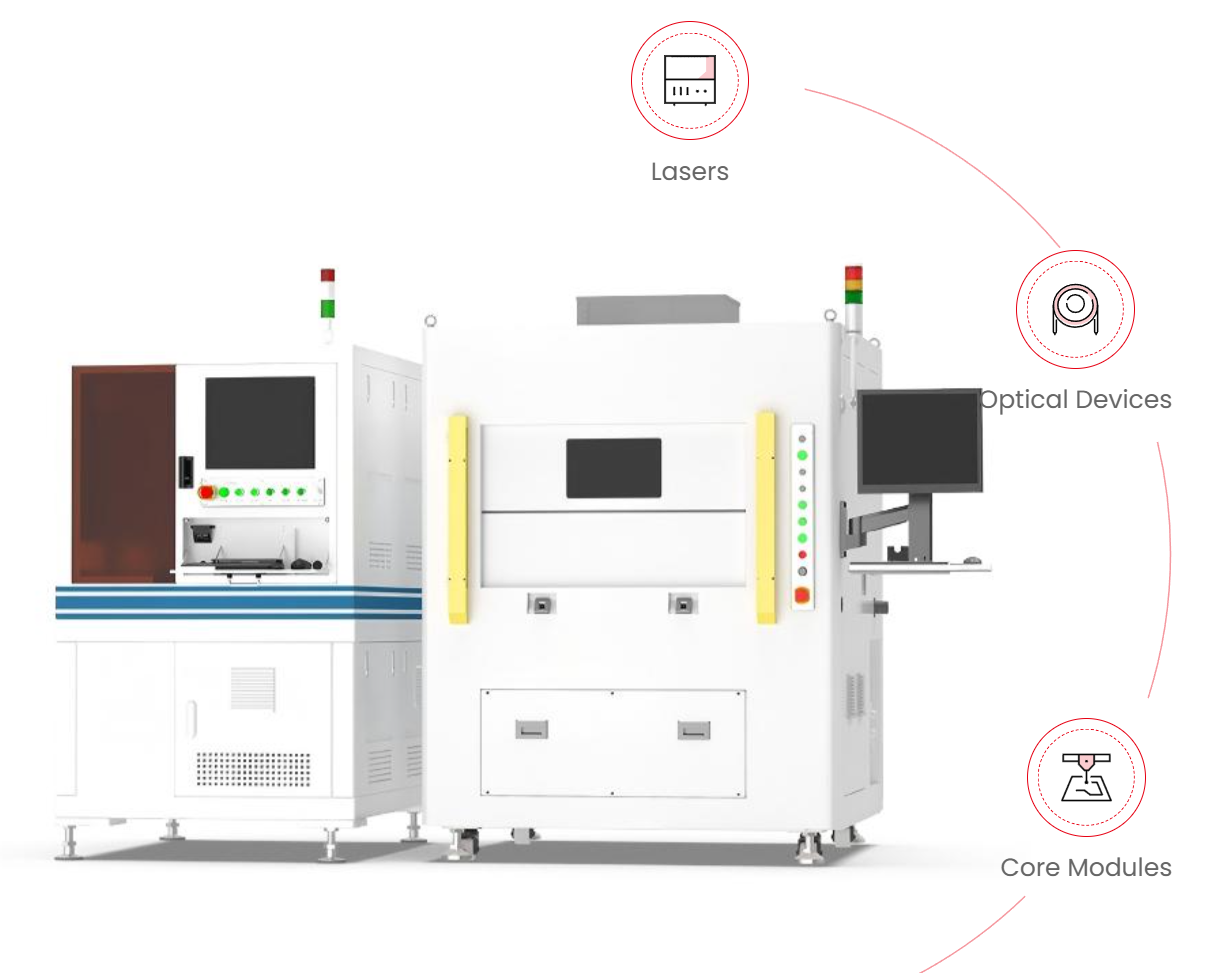
Separating cleaning and welding into a coordinated dual‑beam workflow reduces process variability. A high‑energy pulse cleaning head (200W-class pulse laser) removes oxides and surface films via controlled ablation, creating a consistent surface condition for the subsequent welding beam. The welding head — optimized for pulse duration and repetition rate — then forms the melt pool on a predictable substrate. This staged approach cuts spatter by minimizing the trapped gases and uneven absorption that normally seed expulsions.
Real-world anchors and evidence
Institutes such as Fraunhofer have explored pulsed laser surface conditioning for metals, and leading OEM bodyshops are already trialing staged laser clean‑then‑weld sequences to improve first-pass yields. On the factory floor, teams report measurable drops in rework after implementing beam‑shaped welding plus pre‑pulse cleaning — particularly on busbars and copper battery connectors. These trials underscore how process partitioning translates into production benefits at scale.
Common mistakes teams make — and how to avoid them
Too often we see three recurring errors:
- Assuming one laser head can do both cleaning and welding effectively — without tuning pulse duration or spot shape for each task. Dual‑beam separates the physics and yields more consistent results.
- Neglecting alignment and timing between pulses. Even millisecond mismatches can leave residues that promote spatter.
- Overlooking fixture and fume-extraction design. If vapor plume isn’t removed, it interferes with subsequent pulses and increases variability.
Also, don’t forget to validate with your actual fixtures and joining hardware — lab data is helpful, but production behavior can differ. —
Practical implementation checklist
For teams preparing to adopt this approach, here are straightforward steps:
- Characterize surface contamination and set cleaning pulse fluence just above ablation threshold to avoid substrate damage.
- Select beam‑shaping optics to flatten or tailor the welding spot; aim to reduce peak-to-average intensity ratios.
- Coordinate the dual‑beam timing and include active plume management to prevent re-deposition.
- Monitor key signals — back-reflection, photodiode signatures, and plume emission — to detect process drift in real time.
Alternatives and when they still make sense
Traditional brazing, MIG/TIG with anti-spatter agents, or vacuum brazing remain valid for certain parts where capital cost or cycle time make lasers impractical. However, when cycle speed, repeatability, and minimal post-cleaning are priorities — as in battery tab joining or high-volume busbar production — a dual‑beam laser system paired with beam shaping is often superior. If your throughput requirement is low and aesthetics are paramount, artisanal methods might still be preferred.
Advisory close: three golden rules for evaluation
When assessing systems and vendors, use these three metrics:
- Process yield improvement: measurable reduction in spatter-related rejects after integration (target a clear percentage improvement baseline).
- Control bandwidth: ability to tune pulse duration, repetition rate, and beam shape independently — that flexibility prevents one-size-fits-all compromises.
- Integration readiness: demonstrated output in production environments and support for plume extraction, fixturing, and real-time monitoring.
Evaluate suppliers against those metrics, and prioritize systems that document factory trials or pilot runs. For many manufacturers, a well-implemented beam‑shaped welding line with a coordinated pulse cleaning stage — ideally using a high power femtosecond laser where ultra‑short pulses are warranted — delivers the clearest path to zero‑defect copper joins.
In practice, the right combination of optics, timing, and industrial experience converts laser potential into consistent assembly-line performance — and that’s the value engineers seek from established partners like JPT. —