
Introduction — a small workshop, a big question
I was setting up my mate’s garage print lab the other week and we laughed about how quiet everything looked — until the smell hit. In that second sentence you’ll see why a 3D printer fume extractor matters: printers release volatile organic compounds (VOCs) and ultrafine particulate matter during a run, and those build up faster than most folks expect. Studies and lab tests (simple ones, not rocket science) show printers can spike indoor VOCs and particles to levels you wouldn’t want in a small room — so, what do you do about it? I’m keen to walk you through that, in plain terms, and point out the bits that actually make a difference. No fluff. Just honest gear talk and hands-on tips — sweet as.
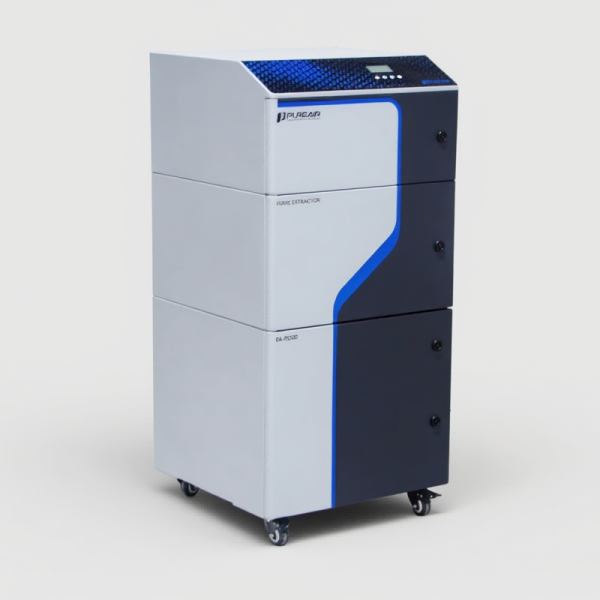
Deep dive: Traditional solution flaws and hidden user pain points
dust collection for additive manufacturing is often sold as a tidy box that fixes everything. In practice, I’ve seen three common failings in labs and small shops: poor capture at source, wrong filter spec, and noisy, underpowered fans. Those flaws let particulate matter and VOCs escape, or they slow prints because people switch extractors off — and then everyone breathes the mess again. From a technical angle, capture hood placement and airflow velocity are huge factors. If the inlet is a foot from the build plate, you lose 70–80% of the capture efficiency. HEPA filters are great for particles, but without activated carbon or a VOC sensor you’ll still have gas-phase contaminants. Look, it’s simpler than you think — fit the right mix of filtration and position it well, and you’ll stop chasing symptoms.
What exactly is failing?
Noise and maintenance are hidden pains, too. Users often tell me they gave up on solutions that claimed “set and forget” because filters clogged, pressure drops ruined airflow, or the unit needed exotic replacement parts. I don’t blame them. I’d rather pay a touch more for a system with clear maintenance intervals, easy filter swaps, and simple airflow balancing. Also — funny how that works, right? — training matters. If people don’t know where to place an extractor, even the best system underperforms. So I look at three elements when I assess a shop: effective capture geometry, matched filtration (HEPA + carbon), and real airflow readings. Those three things separate the toys from the tools.
Forward view: New technology principles and how to choose
What’s next? Systems are moving beyond brute-force suction to smarter, tuned extraction. New principles focus on source capture, adaptive airflow, and integrated sensing. For instance, combining real-time VOC sensors with variable-speed blowers lets the extractor ramp up only when needed. That saves energy and keeps noise down. I’ve started recommending systems that pair cartridge-based filtration (HEPA for fine particulates, activated carbon for organics) with simple digital readouts for airflow and filter life. Another advantage — lower lifetime cost, because you only run heavy extraction when the printer is producing the nasties.
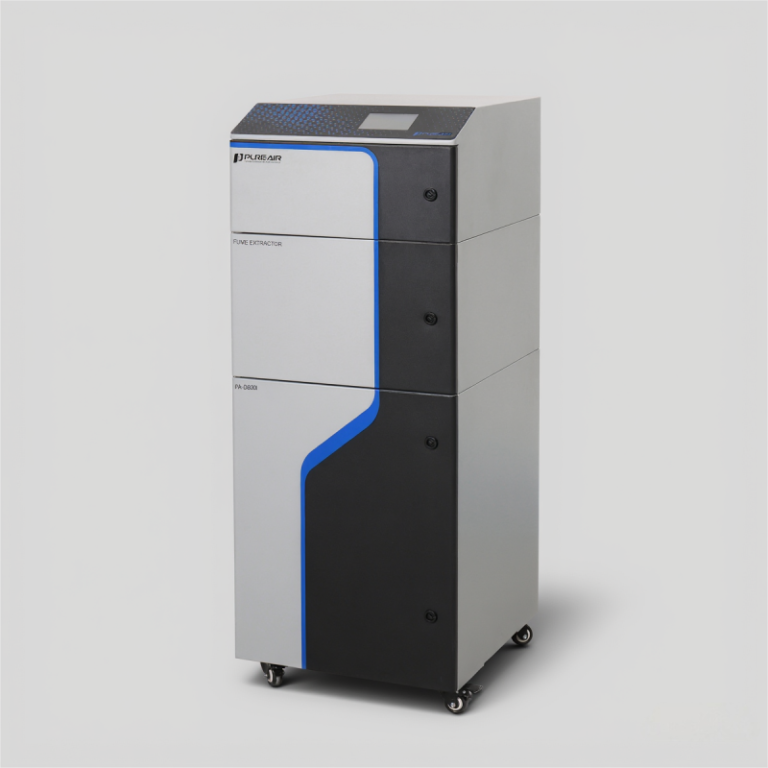
What’s Next — practical picks
When you compare solutions, check how they handle dust and gases together. Good units offer modular filters, easy access for swaps, and straightforward airflow metrics — plus clear guidance on ducting and hood placement. Also, test how the product performs across filament types; ABS behaves differently to PLA or resin prints (yes, resin fumes can be a real nuisance). I’d weigh three evaluation metrics when choosing: capture efficiency at the source, combined filtration spec (HEPA + carbon), and operational ergonomics (noise, filter change ease, and control logic). Those metrics give you measurable results — less downtime, fewer complaints, and lower long-term cost. — I’ve seen it save small shops a lot of hassle.
Bottom line: I’m not pitching miracles. I’m saying be picky. Ask for real capture data, insist on modular filters, and check sensors or readouts so you can verify performance. If you want a practical starting point for gear built for additive workflows, have a look at systems from PURE-AIR. They’re doing sensible things with filtration and controls, and that kind of design matters when you want a print room that’s safe, quiet, and actually usable day to day.