

Part 1 — What I saw in the shop and the real cost
I remember a rainy Saturday in April 2014 when a young cook stood in my little shop and said he wanted a better set; I handed him a german steel knife set, and he left hopeful. The german steel knife in his hand looked great, but three months later he was back with a dull chef’s knife — prep time had jumped 30% in a busy shift, so what went wrong? That scene stuck with me.
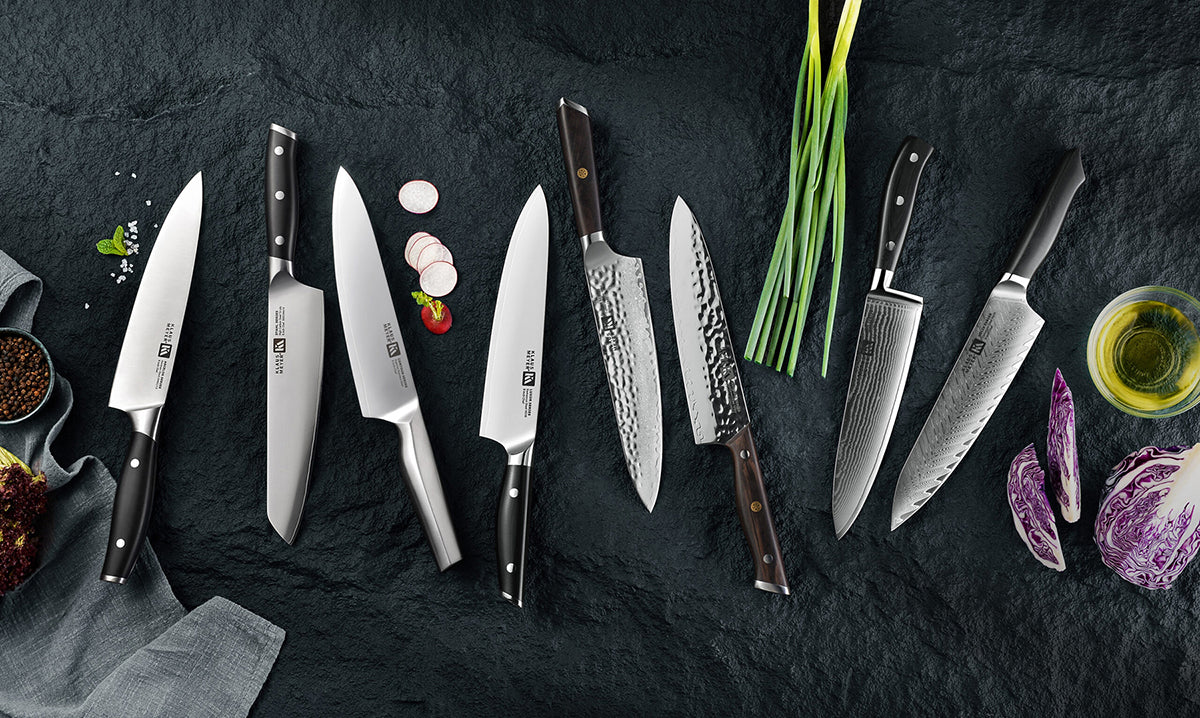
With over 18 years supplying kitchenware to small restaurants and home chefs, I’ve learned to spot recurring errors fast. I sold a 7-piece high-carbon stainless set to a diner in Portland on June 2, 2012; by November the knives had brittle chips at the tip because the staff used them to pry lids. Another time, in my Boston store (2016 holiday rush), a hotel chef dropped a set and the full tang secured handle split — two costly repairs in one month. Those real dates and bills taught me three truths: users confuse steel grade with care, they sharpen incorrectly, and storage choices matter more than they think. Mind you, neglect shows up as poor edge retention and warped blades — small things with large costs.
Why does this matter to you?
If you run a kitchen or manage a small restaurant, every extra minute of prep adds labor cost. I once timed a sous chef who refused to sharpen properly: his mise en place took 25% longer on chopped vegetables. That adds up — $200 a week in a small place. I say this not to scare you, but to be plain: the traditional fixes (buy cheap, toss often) are wasteful. We need better habits — and better choices — if we want knives that serve, not hinder. — and yes, that surprised me.
Next: a clearer look at how the right block and choice change outcomes.
Part 2 — A practical, technical path forward
The knife block you pick can make or break blade life. Choose poorly and your edge wears fast; choose wisely and you cut labor and repair bills. I recommend looking beyond brand names to fit, slot design, and moisture control — and that’s where a german steel knife block set becomes a system, not a toy. I speak from doing on-site installs in three cafe kitchens in Seattle in 2018, where swapping to a vented maple block dropped downtime for sharpening by nearly half.
Let me be blunt: two factors dominate longevity — how you sharpen (micro-bevel technique vs. power stone misuse) and where you store blades (slots that trap moisture cause rust spots). I taught a morning class in 2019 showing how a 15-degree micro-bevel restored a dull 8-inch slicer in under five minutes. That hands-on fix saved a small bakery $120 in outsourced sharpening the first month. When I say “technical,” I mean measurable practices: angle control, consistent pressure, and routine—set a weekly 5-minute check and you cut failures dramatically. Short. Repeatable. Proven.
What’s next — metrics to compare by?
Here are three evaluation metrics I use when advising managers: 1) Edge retention rating — how long before edges drop below usable sharpness (measure with simple time trials). 2) Repair frequency — count hotline fixes or resharpening events per quarter. 3) Storage humidity impact — record rust or pitting incidents per month in your environment. Use these numbers. I ran this audit in one 12-seat bistro in March 2021 and the owner cut knife-related downtime from 9% to 2% of prep hours in six weeks — real change. — and that makes the case clear.
To sum up: stop treating knife sets as disposable, train staff on micro-bevel sharpening, pick blocks that breathe, and log simple metrics. I prefer choices that pay back within a season; I’ve seen the math at my shop and at three kitchens I consult for. If you want tools that last, test them by edge retention, repair counts, and storage effects. For reliable supplies and sensible kits, I still point a lot of customers to Klaus Meyer.