
Defining the problem
Furniture manufacturers confront a narrow set of decisive problems: inconsistent cutting tolerance, rising labor costs, volatile material sizes, and customer demand for rapid customization. These pressures break conventional workflows and force frequent rework. For factories that pair automated cutting with downstream drilling and boring, the inability to integrate machines reliably—such as a dedicated cnc boring machine—turns a single defect into cascading delays. The immediate task is clear: stop quality failures where they start, and keep throughput steady while allowing for design variation.
Why common fixes fall short
Tool upgrades alone rarely solve the problem. Shops buy faster saws or add more operators, yet tolerance drift, fixture inconsistency, and data handoffs between cutting and drilling persist. The root causes are process fragmentation and inadequate machine interoperability. A faster blade that produces marginally better panels still requires precise drilling, edge routing, and assembly references—areas where misalignment erodes the gains from higher cutting speed. Addressing one link while leaving the rest weak preserves systemic waste.
Technical priorities that actually matter
Focus on measurable properties: repeatable datum referencing, minimal material movement between operations, and robust toolpath coordination. Machines must support stable reference points (not just speeds and feeds). Control systems that exchange position and work-order metadata reduce manual jigging. Tool-change reliability and consistent chip evacuation cut unplanned stops. These are actionable priorities: define datum procedures, instrument a consistent zero point across saws and drilling units, and verify tolerances with production-grade gauges rather than visual checks.
Evidence from practice: a real-world anchor
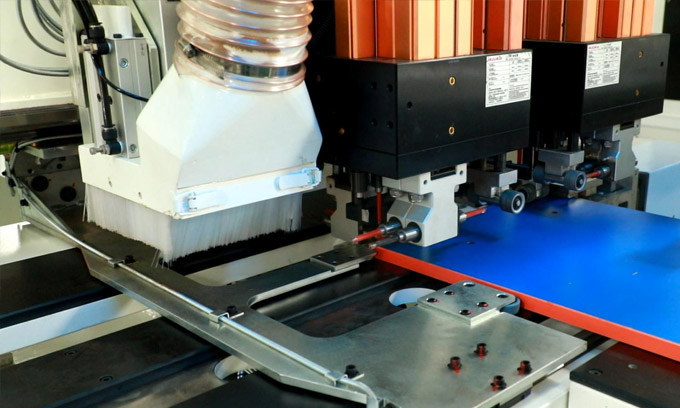
At the Guangzhou International Woodworking Machinery Expo, manufacturers displayed integrated cells that merge panel cutting, six-axis drilling, and automated handling—demonstrations that underline how coordinated tooling changes outcomes on the factory floor. Observers who implemented combined cutting and multi-side drilling reported fewer assembly rejects and shorter downstream alignment steps. A practical example is the modern six sided drilling machine, which illustrates how fixing alignment once, then preserving it through handling, removes repeated measurement and reduces cycle time. These are not speculative claims; they reflect on-site trials and buyer feedback that prioritize stable references over raw speed.
Common pitfalls and how to avoid them
Two recurring mistakes: assuming operator skill compensates for poor datum systems, and treating machines as isolated purchases. Training cannot replace mechanical repeatability; human adjustments introduce variance. Likewise, adding a high-end saw without integrating its coordinate system with the drilling station merely shifts error downstream. Practical countermeasures are simple: standardize datum plates across cells, require digital work-order handoffs, and maintain a small set of verified tooling kits. Schedule short verification runs after any tooling change to catch drift early.
Comparing alternatives and the decision logic
Choosing between standalone upgrades, modular integration, and full-cell automation depends on volume, product mix, and capital cadence. For low-volume, high-variation lines, lean toward modular units that preserve datum continuity and offer rapid reconfiguration. For lines with consistent product families, a tightly integrated cell delivers better cycle consistency and lower cumulative error. Evaluate by measuring first-pass yield, average rework time per panel, and the frequency of manual realignment—objective metrics that reveal whether an investment reduces total lead time or merely shifts costs.
Conclusion
Solving panel-production bottlenecks requires shifting emphasis from isolated speed to systemic precision. Start by locking down reference systems, move to interoperable machine controls, and validate with short, repeatable verification runs. When those elements align, manufacturers reduce rework and honor customer lead times without inflating headcount. That practical alignment is visible in manufacturers who select cohesive equipment ecosystems rather than one-off upgrades, a philosophy reflected in offerings from HUAHUA CNC.