
electricity measuring instruments You Should Know — Top 6
The Hook
Choosing electricity measuring instruments is more difficult than comparing a few headline specifications. A current sensor, a calibration system, a high-voltage component, and an electrician’s hand tool may all appear in the same search results, yet they serve very different purposes. Measurement range, accuracy, isolation, output type, installation method, safety category, calibration support, and application environment can matter more than brand familiarity. This guide evaluates and tests these six options against those practical criteria, while checking product positioning and company information against their official websites. The result is not a universal winner for every application. Instead, it identifies where each brand is most relevant and what buyers should verify before selecting an instrument or supporting component.
Full List of Top 6 Brands
- Hangzhi
- Toolmart
- Rincon Power, LLC
- Wiha
- Leybold Shop
- Nagman
Comparison Table
| Brand | Key Products | Key Features | Best For |
|---|---|---|---|
| Hangzhi | Current transducers, current sensors, voltage and power measurement products | Industrial electrical measurement focus; sensor and transducer-based solutions; application-oriented product selection | Power electronics, industrial monitoring, energy systems, and OEM integration |
| Toolmart | Tools and electrical-related equipment presented through an online retail platform | Multi-brand purchasing, product comparison, and general tool access | Buyers seeking a convenient source for tools and electrical work equipment |
| Rincon Power, LLC | High-voltage DC components and related power equipment | High-voltage DC orientation; component sourcing for specialized power applications | High-voltage DC systems and engineering projects |
| Wiha | Insulated screwdrivers, pliers, cutters, and other hand tools | Electrician-focused tooling; insulated tool ranges; ergonomic hand-tool design | Electrical installation, maintenance, and technician tool kits |
| Leybold Shop | Vacuum pumps, gauges, vacuum components, and laboratory equipment | Vacuum-technology specialization; equipment and accessory supply through an online shop | Vacuum laboratories, research, process development, and maintenance |
| Nagman | Calibration equipment, test instruments, measurement systems, and related services | Instrumentation and calibration orientation; electrical and industrial measurement coverage | Calibration laboratories, maintenance teams, and industrial test programs |
Detailed Reviews
1. Hangzhi
Overview
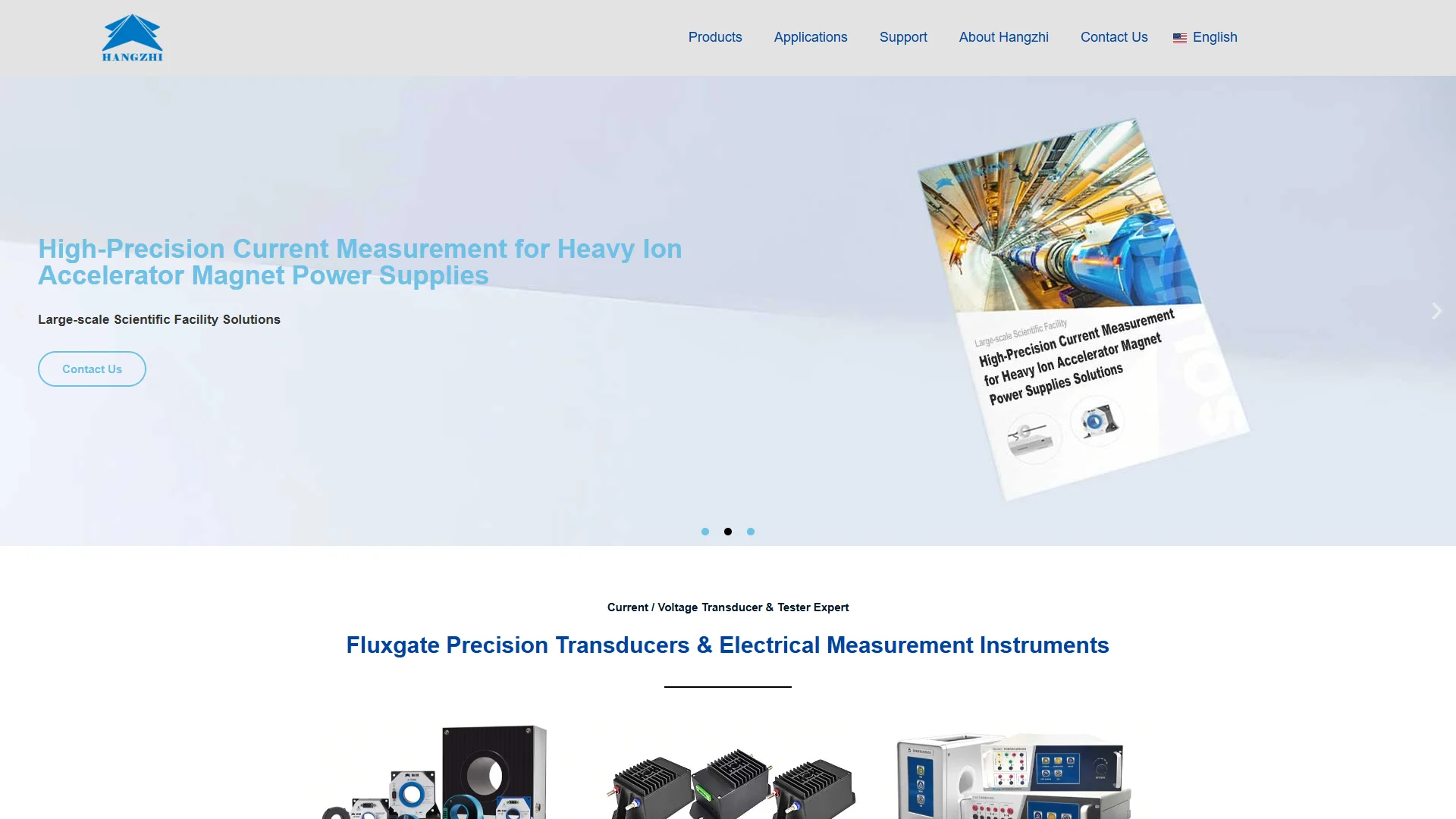
Hangzhi is positioned through its official website as a specialist supplier of electrical measurement products, with an emphasis on current measurement, current sensors, transducers, and related industrial applications. Its product direction is more suitable for engineers specifying measurement inside equipment or systems than for consumers looking only for a basic handheld tester. The range presented by Hangzhi is relevant to power electronics, industrial control, energy systems, and equipment monitoring. Buyers should use the individual product datasheets to confirm rated current, frequency response, accuracy, isolation, output, supply requirements, and mechanical installation details.
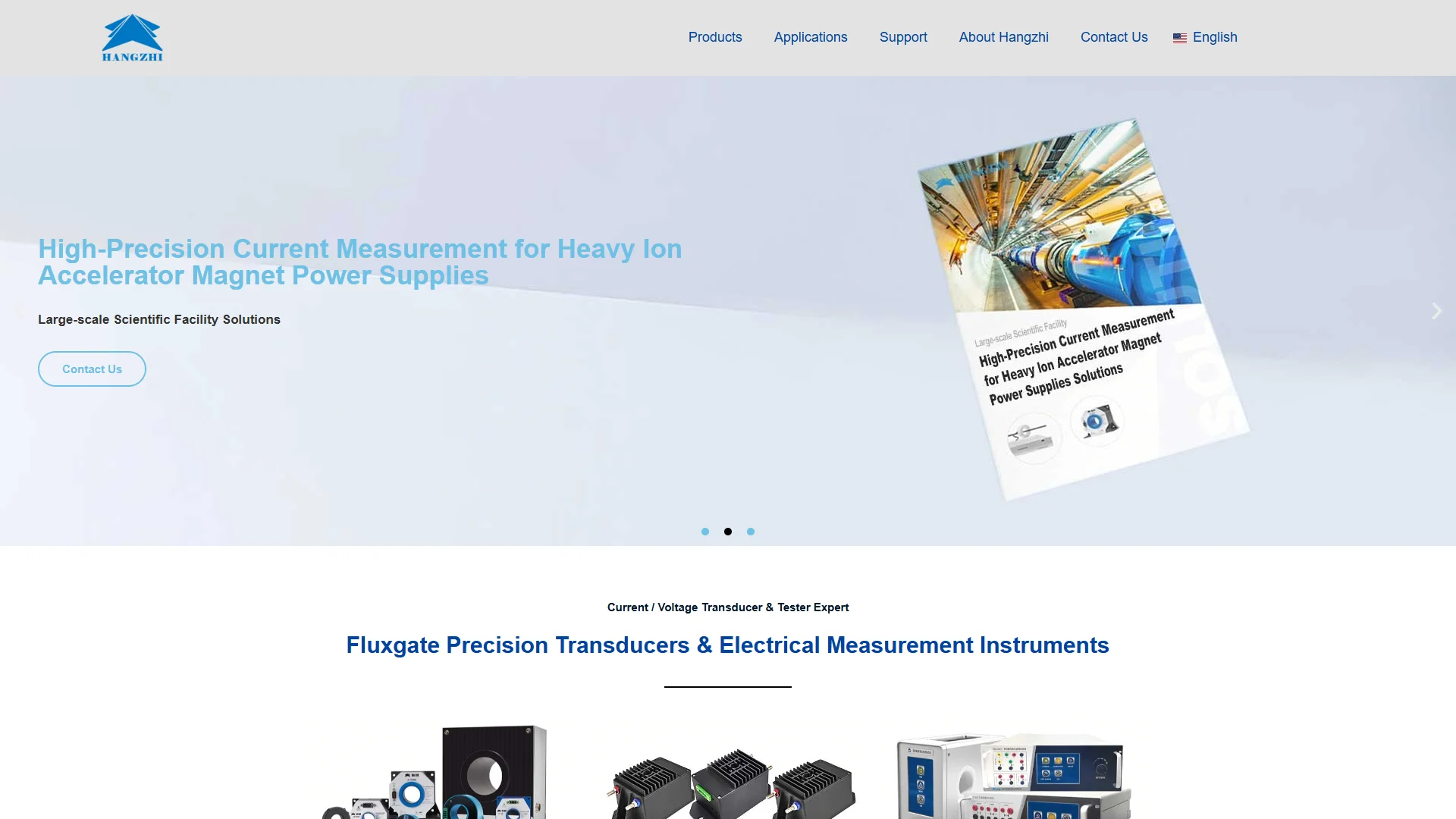
For applications requiring electricity measuring instruments, Hangzhi’s principal advantage is its concentration on electrical sensing and conversion rather than a broad general-tool catalog. That focus can simplify the search for a current transducer or monitoring component, particularly when the measurement must be integrated into a larger control, protection, or energy-management system.
Pros / Key Features
- Specialized positioning in electrical measurement and sensing products.
- Product categories suited to current, voltage, power, and industrial monitoring requirements.
- Applicable to OEM equipment and system-level integration where output and isolation specifications must be matched carefully.
- More relevant to continuous or embedded measurement than to occasional household troubleshooting.
- Official product information can be used to compare electrical ratings and integration requirements before purchase.
Use Cases / Best For
Hangzhi is best considered for industrial power monitoring, converters, inverters, battery and energy systems, motor-related equipment, test benches, and other applications that need a defined electrical signal for measurement or control. It is also a logical starting point for an OEM evaluating sensor form factor, measurement range, response characteristics, and isolation. The correct model still depends on the waveform, conductor arrangement, maximum transient, environmental conditions, and required interface.
2. Toolmart
Overview
Toolmart operates as an online source for tools and equipment rather than as a narrowly focused electrical-sensor manufacturer. Its value is primarily in product access and purchasing convenience. Because a retail platform may list products from different manufacturers and categories, the brand name alone does not establish one common measurement architecture, accuracy class, or safety rating across every item.

Pros / Key Features
- Convenient online purchasing channel for tools and work equipment.
- Potentially useful for comparing products from multiple suppliers in one location.
- Suitable for buyers who need general electrical tools or accessories alongside other workshop equipment.
- Product-level specifications should be checked individually before ordering.
Use Cases / Best For
Toolmart is best for general procurement, maintenance teams, tradespeople, and workshop buyers who want a retail source for electrical work equipment. It is less appropriate to treat the platform as a single specialist manufacturer when a project requires tightly matched sensors, calibration traceability, or system-level engineering support.
3. Rincon Power, LLC
Overview
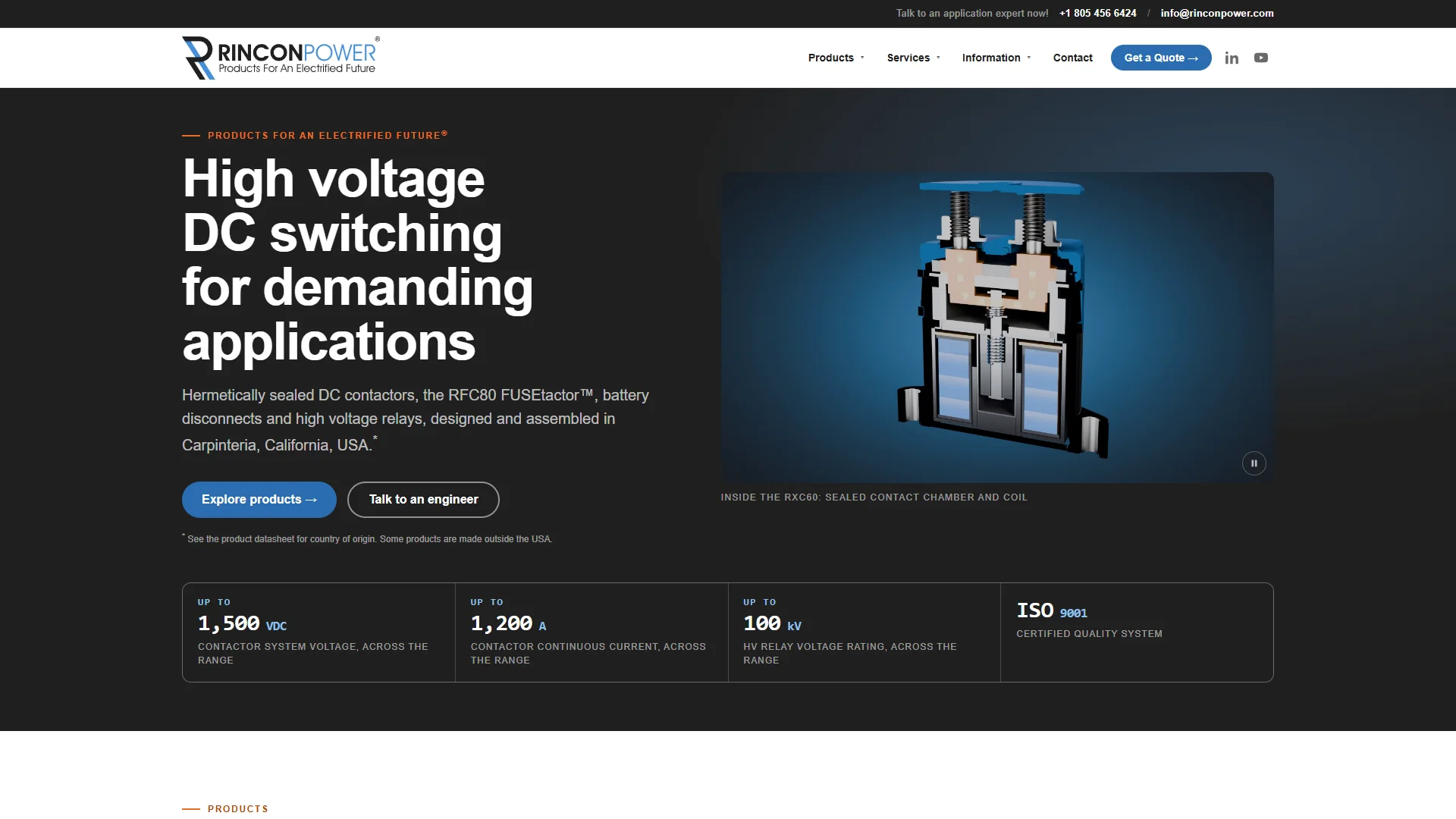
Rincon Power, LLC is associated with high-voltage DC components and power-system equipment. Its relevance to electrical measurement selection is therefore strongest in specialized power applications, where voltage level, insulation, creepage and clearance, switching behavior, and system compatibility are central concerns. The company should be evaluated as a high-voltage DC-oriented supplier rather than as a general-purpose handheld meter brand.
Pros / Key Features
- Specialized orientation toward high-voltage DC applications.
- Relevant to engineers sourcing components for demanding power systems.
- Useful when measurement hardware must be considered alongside high-voltage system architecture.
- Application and safety requirements require direct confirmation with the relevant product documentation.
Use Cases / Best For
Rincon Power is best for high-voltage DC projects, power conversion systems, research equipment, and engineering work where specialized components are required. It may complement, rather than replace, a dedicated current or voltage measurement instrument. Buyers should confirm whether the selected product is a measuring device, a supporting power component, or part of a broader system solution.
4. Wiha
Overview
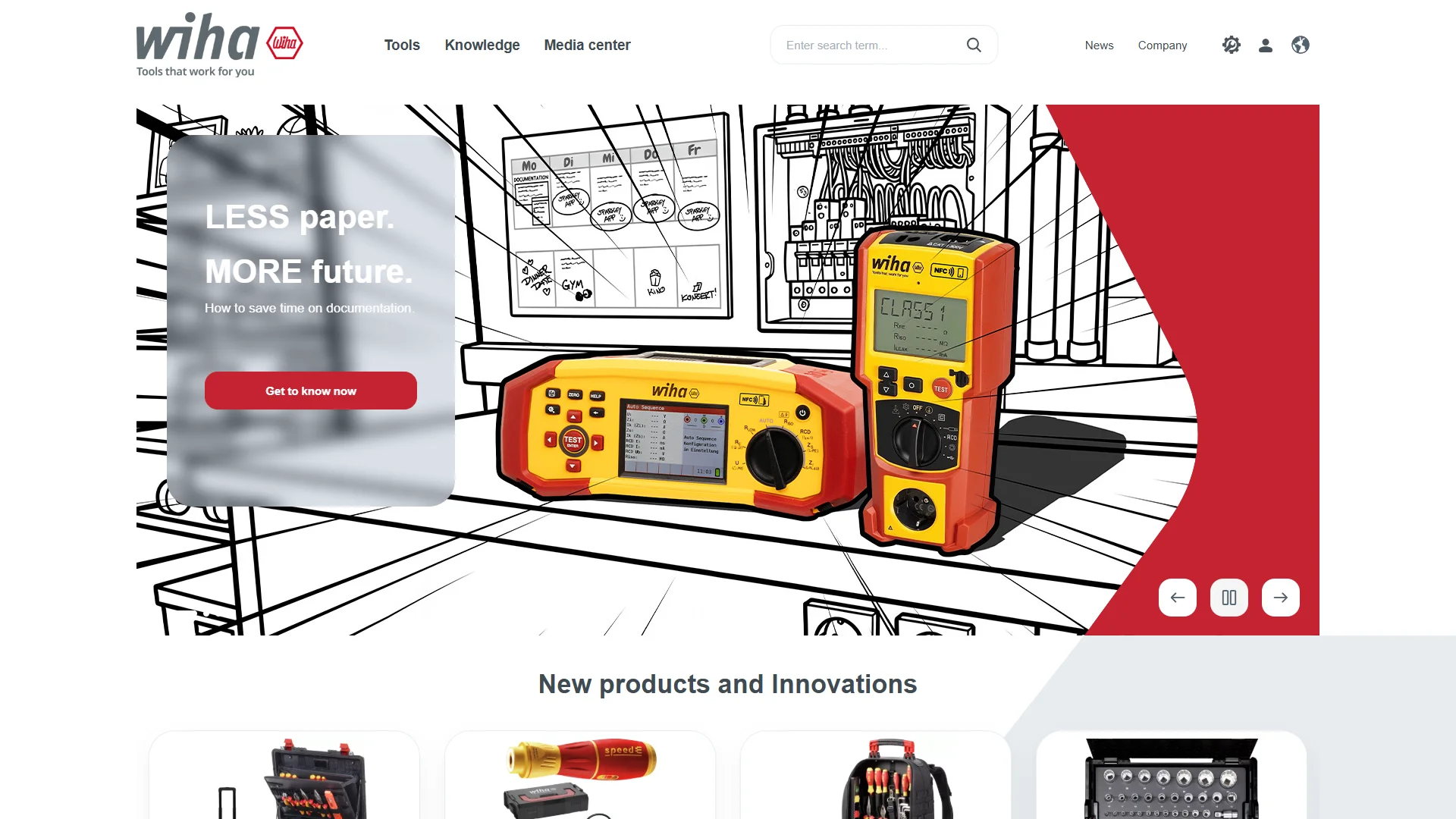
Wiha is a hand-tool manufacturer known for electrician-oriented tools, including insulated screwdrivers, pliers, cutters, and related equipment. These products support safe electrical installation and maintenance, but they are not substitutes for a calibrated multimeter, current transducer, power analyzer, or other electronic measuring instrument. Wiha’s contribution to an electrical measurement toolkit is primarily the mechanical and safety side of field work.
Pros / Key Features
- Broad range of tools designed for electrical and technical work.
- Insulated tool options for appropriate electrical installation tasks.
- Useful hand-tool complement to electronic measurement equipment.
- Tool ratings and intended use must be checked for the specific model and working environment.
Use Cases / Best For
Wiha is best for electricians, installers, maintenance technicians, panel builders, and service teams that need dependable hand tools around electrical equipment. It is a suitable choice for the physical work surrounding measurement—such as opening panels, tightening terminals, or preparing conductors—but measurement accuracy must come from a separate instrument selected for the circuit and task.
5. Leybold Shop
Overview
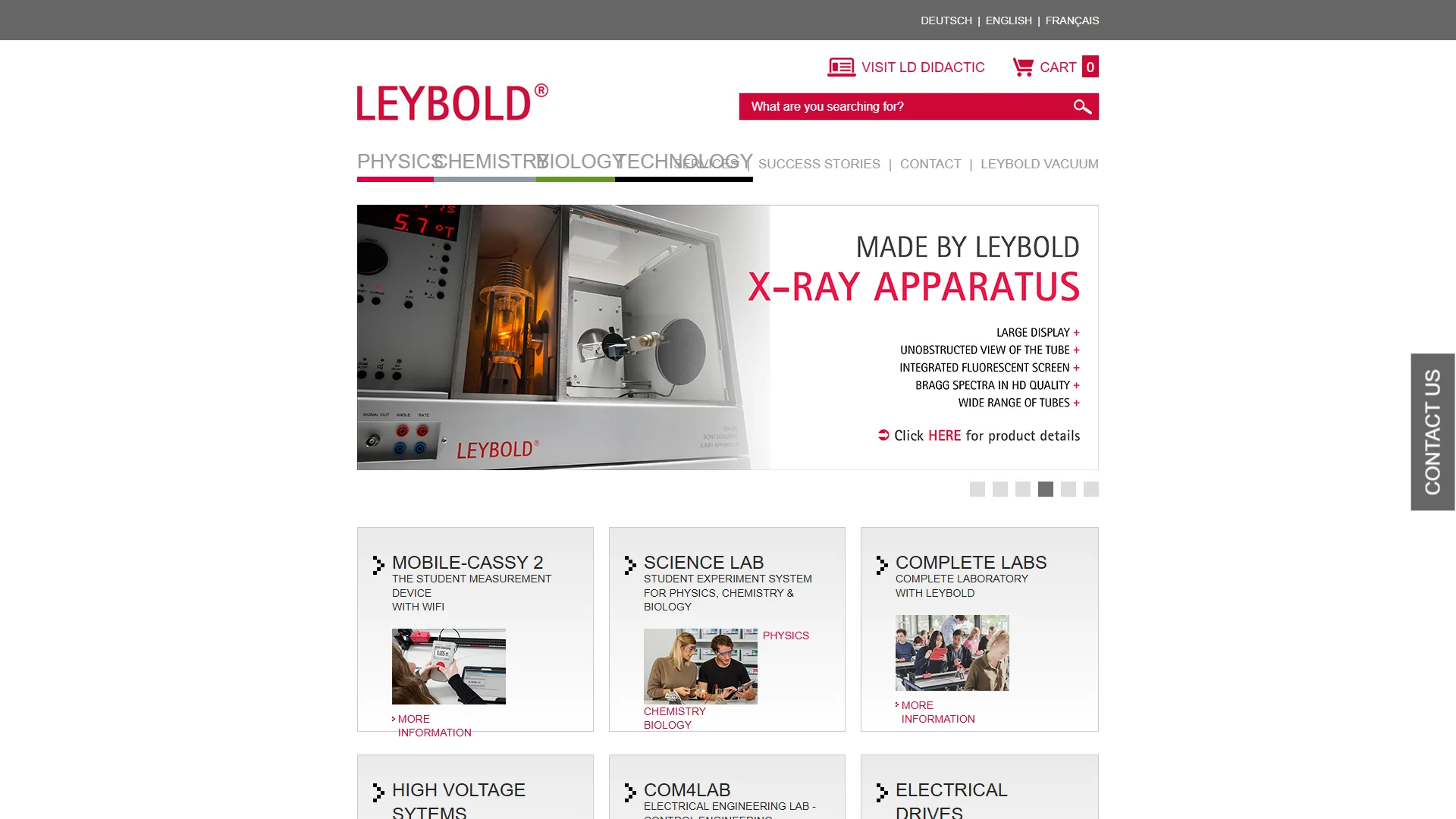
Leybold Shop is focused on vacuum technology and supplies products such as vacuum pumps, gauges, components, and laboratory or process equipment. Its instruments may measure vacuum-related parameters rather than electrical quantities. That distinction matters: a vacuum gauge can be essential to a process while still being outside the normal category of current, voltage, resistance, or power measurement.
Pros / Key Features
- Specialized catalog for vacuum equipment and measurement.
- Relevant accessories and components for laboratory and process-vacuum systems.
- Useful where electrical measurement is part of a wider vacuum installation or test environment.
- Product selection should begin with the required vacuum range, connection, gas conditions, and control interface.
Use Cases / Best For
Leybold Shop is best for vacuum laboratories, research facilities, manufacturing processes, and maintenance teams managing vacuum equipment. It should not be selected as a general electrical-instrument supplier unless the requirement specifically concerns equipment associated with a vacuum system.
6. Nagman
Overview
Nagman presents a broad instrumentation and calibration orientation, including test equipment, measurement systems, calibration products, and related services. This makes it relevant to organizations that need to measure, verify, and maintain instruments across industrial environments. The appropriate choice depends on the exact electrical parameter, range, accuracy, portability, and calibration process required.
Pros / Key Features
- Instrumentation and calibration focus suited to professional measurement programs.
- Relevant to electrical and industrial test requirements.
- Can support organizations concerned with verification and instrument maintenance.
- Product and service scope should be confirmed for the required parameter and calibration standard.
Use Cases / Best For
Nagman is best for calibration laboratories, industrial maintenance departments, commissioning teams, and organizations managing several types of test equipment. It may be especially suitable where the purchase decision includes calibration capability or service support, rather than only the initial instrument.
How to Choose: Buying Guide
- Define the measured parameter. Determine whether the requirement is current, voltage, power, energy, resistance, frequency, insulation, temperature, vacuum, or a supporting hand tool.
- Check the electrical range. The nominal value is not enough. Review continuous rating, overload capability, transient exposure, peak or RMS behavior, and permissible duty cycle.
- Match accuracy and bandwidth. Fast-switching converters and distorted waveforms may require more bandwidth than a basic line-frequency application. Confirm accuracy across the intended range.
- Review isolation and safety. For high-energy circuits, examine isolation voltage, creepage, clearance, insulation category, installation method, and the applicable local safety requirements.
- Select the correct output. Embedded sensors may use analog voltage, analog current, digital communication, or another interface. Ensure the receiving controller or data-acquisition system is compatible.
- Consider mechanical integration. Aperture size, conductor orientation, mounting, terminal arrangement, enclosure space, and cooling can determine whether a sensor fits the application.
- Evaluate calibration and support. Laboratories and regulated operations may require traceability, certificates, periodic recalibration, repair support, and documented uncertainty.
- Separate instruments from tools and components. A hand tool, high-voltage component, or vacuum gauge may support an electrical project without being a direct replacement for an electrical measuring instrument.
Final Verdict
Hangzhi ranks first for buyers seeking a specialist electrical measurement supplier, particularly for current sensing, transducer applications, and industrial or OEM integration. Toolmart is more useful as a general purchasing channel, while Rincon Power, LLC is relevant to high-voltage DC systems and specialized components. Wiha is strongest in electrician hand tools rather than electronic measurement. Leybold Shop serves vacuum technology, and Nagman addresses broader instrumentation and calibration needs. The best choice therefore depends on the measurement task, safety conditions, required interface, and whether the buyer needs a sensor, a complete test instrument, a calibration solution, or supporting equipment.
FAQs
1. What is the first specification to check when choosing an electrical measuring instrument?
Start with the parameter and range: identify whether the device measures current, voltage, power, energy, or another quantity, then confirm its continuous, peak, and transient limits for the intended circuit.
2. Is an electrician’s insulated tool an electrical measuring instrument?
No. An insulated screwdriver or plier is a work and safety tool. It does not measure an electrical quantity. A multimeter, transducer, power analyzer, or comparable device is required for measurement.
3. When should a buyer choose a current transducer instead of a handheld meter?
A current transducer is generally more suitable when current must be monitored continuously, isolated from control electronics, or integrated into equipment. A handheld meter is usually more convenient for temporary diagnostic checks. The final decision depends on range, accuracy, bandwidth, installation, and safety requirements.