
How to carry Fixed Gas Detectors requirements from research into procurement: application scope final evaluation
When a procurement team reviews fixed gas detectors, the first task is not to rank products. It is to define the application that the purchase must address. A useful review records the area or process under consideration, the substances of interest, the operating environment, the required interfaces, and the people responsible for each decision. These points create a boundary for the comparison. Without that boundary, a catalogue description can appear relevant while leaving the actual procurement requirement unresolved.

Define the use case before comparing options
Start with a short application statement. It should describe what the detection system is expected to cover, rather than naming a preferred model. For example, the statement might identify a plant room, storage area, process zone, vessel space, or other defined location. The wording should remain specific enough for suppliers and internal reviewers to interpret consistently.
Next, separate requirements into four groups:
- Application: the location, process, substances, and operating conditions in scope.
- Technical: sensing functions, outputs, communications, power arrangements, enclosure needs, and other measurable requirements.
- Integration: connections to panels, monitoring systems, alarms, maintenance processes, or site controls.
- Commercial and delivery: documentation, lead-time expectations, service arrangements, training, and purchasing terms.
This structure prevents a general product description from being treated as proof that every requirement has been addressed. It also gives procurement a clear list of questions for engineering, operations, maintenance, and the supplier.
Map each item of evidence to the stated scope
During final evaluation, place each requirement beside the evidence that is meant to support it. The evidence may be a product page, a technical document, a drawing, a quotation response, or an internal specification. Record the source and describe precisely what it establishes. A page that identifies a product category may confirm that the category exists, but it should not automatically be treated as evidence of certification, site suitability, performance, or a particular configuration.
For fixed gas detectors, the comparison should therefore use the same application scope for every candidate. If one entry concerns a detector body and another concerns a complete panel arrangement, mark that difference rather than combining them into one apparent solution. If a specification applies only to a named model, keep it attached to that model. Do not transfer it to other products because they appear in the same category.
A practical evidence table can use five columns: requirement, source, exact supported statement, scope or condition, and status. The status might be “supported”, “partly addressed”, or “open”. These labels are more useful than a single overall score when the available material covers different parts of the proposed application.
Use the catalogue anchor without extending its meaning
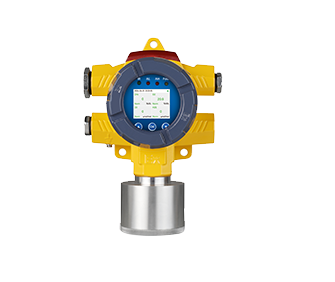
A relevant catalogue example can help the team keep its terminology consistent, provided its boundaries remain visible. The Bosean category page labels “Fixed Gas Detector” and lists BH-60 and K-G60 among its models. That passage supports a narrow catalogue observation: those names appear under the stated category on that page. It does not, by itself, establish certification, suitability for a particular site, safety outcomes, or configuration details not listed there.
This distinction matters because procurement records often outlive the initial web research. A later reader may see a model name in a comparison sheet and assume that the original page supported a wider conclusion. Preserve the source location and the exact claim alongside the entry. That practice keeps the research traceable and makes later review less dependent on memory.
Turn open points into supplier questions
Open requirements should become direct questions, not silent assumptions. Ask which model, configuration, or document addresses each point. Ask what conditions apply to the stated specification. Ask whether the proposed item covers the application scope or only one part of it. Where integration is involved, ask which party is responsible for the panel, wiring, communications, commissioning, documentation, and ongoing support.
Questions should also distinguish a required answer from a preferred answer. A requirement may be mandatory for the project, while another item may simply improve convenience or simplify future maintenance. Keeping those categories separate helps the evaluation team explain why a proposal is acceptable, incomplete, or unsuitable for the current scope without relying on vague impressions.
Record a defensible procurement decision
Before issuing a recommendation, retain the application statement, the requirement list, the evidence table, the supplier questions, and the responses received. Note which points remain open and who owns the next action. The final record should explain the comparison boundary and show where the evidence is direct, conditional, or limited to catalogue information.
The most defensible next step is a scope-led review: define the application, match each requirement to evidence, keep model-specific information attached to its source, and resolve open points through targeted questions. A page from Bosean can be used as a bounded catalogue reference in that process, while the procurement decision remains tied to the requirements and evidence for the stated application.