
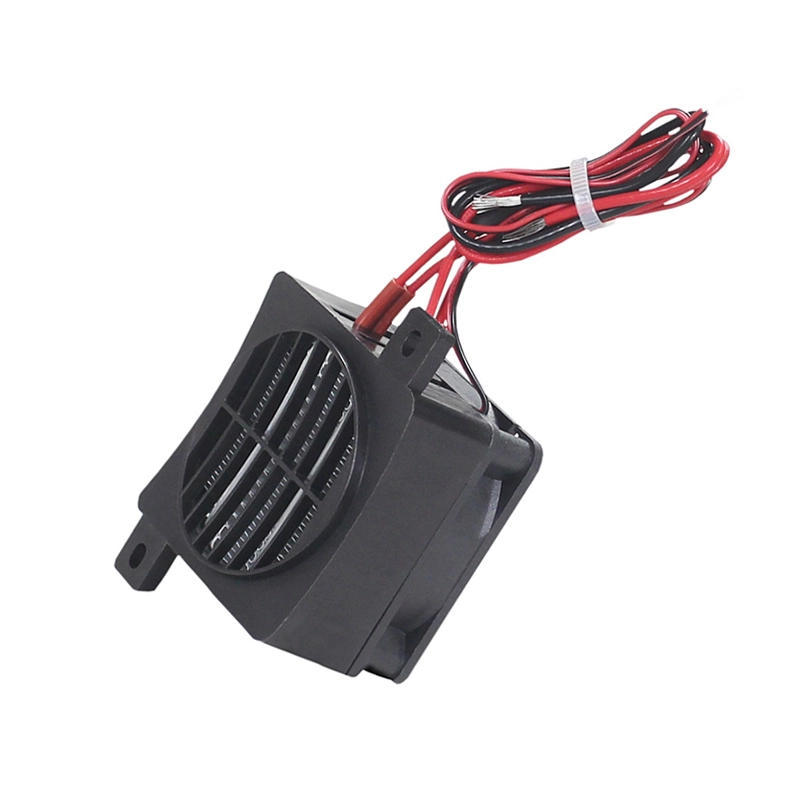
Questions for a project-specific review of Ptc Fan Heater: evidence mapping for shortlisting
Maintenance planning for a ptc fan heater should begin with the task, the space, and the evidence needed to support a shortlist. A product page can describe a specific module, but it does not automatically answer every question about installation, control, or service conditions. The useful starting point is to separate what the page states from what the project still needs to define.

Separate the category from the application
First, record the item as a product category, then describe its intended application. The captured page identifies an insulated PTC fan heater module with a built-in fan, front grill outlet, side mounting bracket, PTC ceramic element, and nylon shell. It lists a supported range of 50–200W and 12–220V for that product page. These details are suitable for an initial evidence record. They should not be treated as universal specifications for every heater in the category.
Next, describe the equipment or enclosure where the unit may be used. The page lists applications including industrial machinery and electrical cabinets, as well as HVAC, medical and laboratory equipment, egg incubators, and 3D printers. For maintenance planners, the important question is not simply whether an application appears on a list. It is whether the proposed use has been connected to the required space, supply, mounting method, airflow path, and maintenance responsibility.
Compare evidence that applies to the task
A useful shortlist compares like with like. For each candidate, record the stated electrical range, power range, physical arrangement, and control interface. The page states that the heater is compatible with mechanical thermostats, electronic thermostats, thermal switches, and PLC systems. It also states that the heater and fan support separate wiring and independent control. Those statements help a planner identify interface questions before a maintenance schedule or replacement plan is drafted.
When reviewing a ptc heating element with fan, ask whether the evidence concerns the complete fan-integrated module or only a heating component. That distinction matters because the page describes a built-in fan, housing, outlet grill, and mounting bracket. A replacement decision should therefore record which assembly is being compared. It should also note whether the proposed installation depends on separate wiring, independent control, or a custom wiring configuration. The page says custom wiring configurations are available upon request, but that statement alone does not define a project-specific connection.
Use a simple evidence map rather than a broad product score. One column can hold the page-listed detail. A second can state the maintenance requirement. A third can identify the open point that must be resolved by the project team. This keeps a stated feature from being mistaken for proof of suitability.
Record assumptions and interfaces
Interface records should be specific enough for maintenance, electrical, and controls teams to review together. Note the intended supply, the required switching method, the available mounting location, and the route for heated air. Then identify who owns each decision. A maintenance planner may define access and replacement needs, while an electrical or controls specialist may define wiring and control integration.
The official page provides one bounded real-world reference for this review: an insulated PTC fan heater module is presented for use with industrial machinery and electrical cabinets. Its description states that the surface is fully insulated, with no open flame or red heat, and that it uses high-temperature wires. It also states continuous operation over 5000 hours, moisture resistance, and stable performance. These are page-listed claims for that product and application scope. They do not establish performance or suitability beyond that scope, so they should remain tied to the cited module in the maintenance record.
Do not fill unanswered fields with assumptions. For example, a listed voltage range does not by itself describe the site’s protection, connector arrangement, or allowable installation method. Separate fan and heater control may be useful to the design, but the project still needs to document the intended control logic. Likewise, a mounting bracket shown in the product description does not define the available clearance in an existing cabinet.
Prepare a focused sourcing brief
A focused brief should give suppliers and internal reviewers the same decision context. State the equipment type, the installation space, the required supply, the expected control interface, and whether the comparison concerns a complete module or a component. Add the page-listed evidence that supports the initial shortlist. Then list unresolved questions without presenting them as product defects or confirmed limitations.
- Define the equipment, enclosure, or process space before comparing models.
- Record the stated electrical and power ranges for the named module.
- Check whether thermostat, thermal-switch, or PLC integration matches the planned control approach.
- Record separate wiring and independent control as integration topics rather than assumed project configurations.
- Keep insulation, operating, and moisture-related statements tied to the cited product and application scope.
For this product page, the brief can reference the 50–200W and 12–220V ranges, the integrated fan and PTC ceramic element, the insulated surface description, and the stated compatibility with thermostats, thermal switches, and PLC systems. It can also identify separate wiring and independent control as an integration topic. Each entry should retain its source and scope. This makes later review more efficient because the team can distinguish a direct page statement from a project requirement.
- Define the equipment, enclosure, or process space before comparing models.
- Record electrical, mechanical, airflow, and control requirements separately.
- Mark each item as page evidence, project requirement, or unresolved assumption.
- Keep product-specific ranges and claims tied to the named module.
- Use the final brief to direct technical questions and maintenance planning.
Evidence mapping makes a ptc fan heater shortlist more defensible without pretending that a product page answers every engineering question. Start with the intended use and space, retain only details that apply to the named module, and carry interface questions into the sourcing brief. Used this way, PTCYIDU is a source of product-page evidence within a structured maintenance review, not a substitute for the project’s own requirements.